
There are some out of measure spirits that escape standard strengths and market rules and give unique aromatic complexities
If, in the first Industrial Revolution, standardization answered primarily to the need for production efficiency, in the era of prêt-à-porter, fast fashion, flat-pack furniture and plastic watches the process has gone further, and conformity now feels reassuring. Step into a tailor’s workshop or a carpentry studio today and you risk feeling out of place: you no longer know the measurements of the body beyond a size, nor those of a home beyond square footage. Anything that falls outside the expected range can seem wrong — or, at the other extreme, overly rarefied.
Beyond Measure and Stylistic Freedom
And yet measure is also a metric. In music, “out of measure” describes a rhythm that slips outside regular time; in poetry, a line that resists the cage of syllables. It is a stylistic freedom that took years to earn, and that now allows us to appreciate a painting even when it appears to break its frame.
Excise Duty on Spirits: How It Works
To an untrained eye, the “frame” of a spirit might seem to be the bottle. In reality, the constraints are far less visible and far more rigid than glass: regulation, taxation and the need for reproducibility.
A practical example makes the point. For the same format — say, 70 cl — excise duty varies according to alcoholic strength. Across the European Union, spirits are taxed not on the bottle itself but on the amount of pure alcohol it contains. It is a technical, mathematical criterion: the tax applies to hectoliters of anhydrous alcohol, not to the commercial product. Two identical bottles by volume but different in strength do not carry the same duty. A 70 cl bottle at 40% ABV contains less pure alcohol than one at 46% or 58%, and because the tax is calculated on that quantity, the latter will be taxed proportionally more.
What Are Overproof Spirits?
Add to this the structure of the spirits industry — where a handful of multinational groups control a large share of production, and must turn out millions of bottles that taste and measure the same to meet both consumer expectations and operational demands — and it becomes easier to understand why most spirits cluster within a relatively narrow band, typically between 40 and 50 percent ABV.
And yet, even here, there are outliers, made by hand like tailored shirts; at times as abrupt as the shifting accents in Stravinsky’s “The Rite of Spring”, at others as layered as Montale’s “Ossi di sepia”. These are the bottles commonly labeled overproof, cask strength or full proof, where the alcohol level is not set at bottling but is the outcome of years of natural evolution in cask.
Aging in Out of Measures Spirits
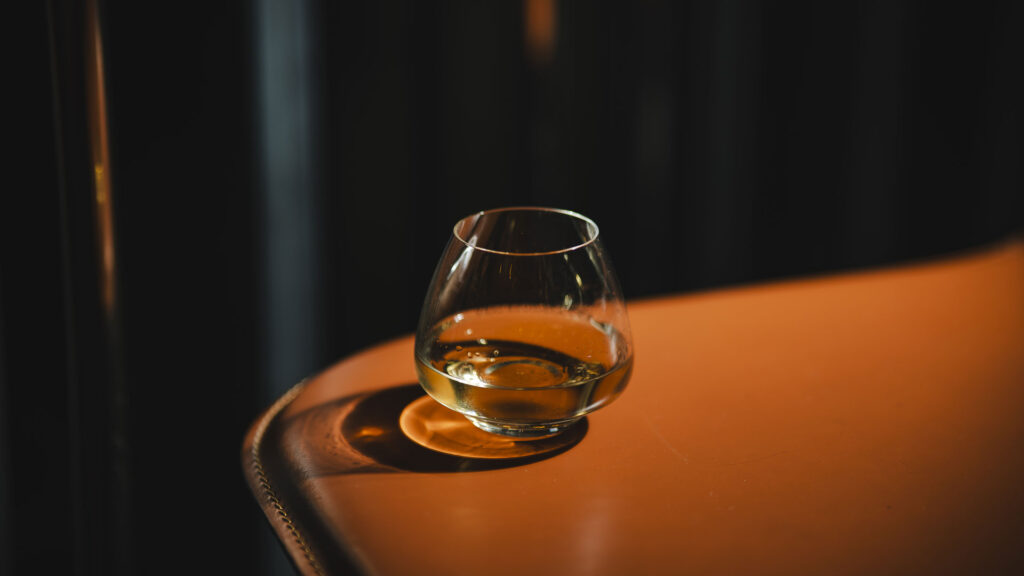
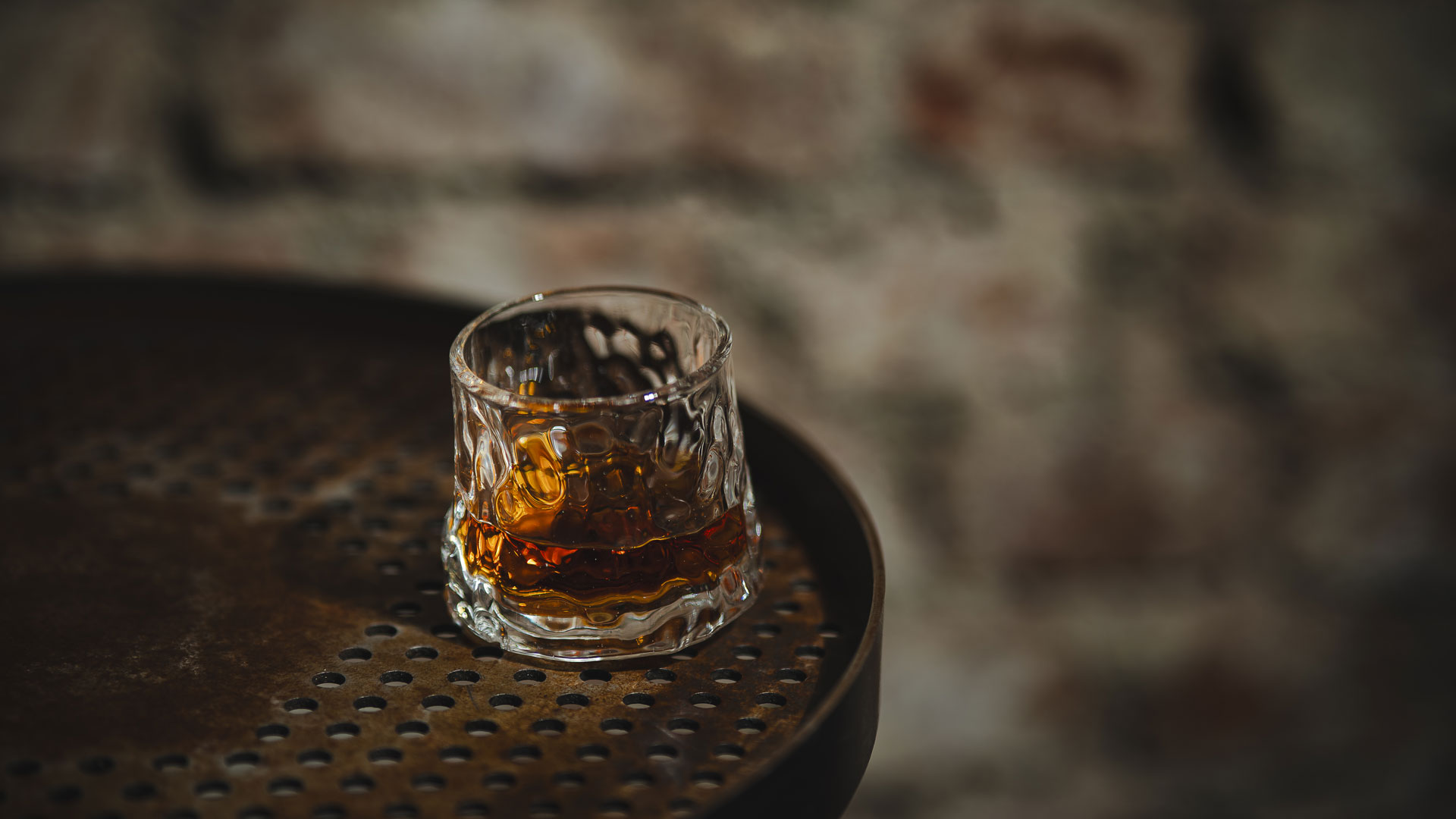
During aging, as is well known, a spirit does not remain static. Through the pores of the wood, part of the liquid slowly evaporates — the so-called angel’s share. What escapes is not only alcohol or only water, but both, in proportions that depend on climate, humidity and warehouse conditions.
In colder, more humid climates like Scotland, slightly more alcohol than water tends to evaporate, and the strength may decrease over time. In warmer, drier environments such as the Caribbean or Kentucky, more water evaporates, and the strength can rise year after year. After 10, 15 or 20 years, the ABV is no longer what it was at the start, but what has been determined by this equilibrium between wood, air and time. The difference is that while in the mass market blending and dilution bring the spirit to a target strength, here nothing is adjusted.
Single Casks and the Market for Unconventional Distillates
How much room is there, really, for this kind of product — and beyond the poetry, why does it matter? Paradoxically, a degree of growth in this niche has been driven by the speculation that has swept through whisky in recent years, putting the focus on the concept of the single cask.
A single barrel yields only a few hundred bottles, and that scale makes it commercially viable to bottle at higher strengths. The market is small, but so is the supply. A batch like this tends to find, without much difficulty, an audience willing to engage with a more demanding spirit. The equation changes once you move beyond the cask and away from the collector’s sphere. At that point, the market is more exposed to its limits, and the choice of high ABV can come into tension with drinkability and broader appeal.
Drinking Out of Measure to Discover Greater Aromatic Complexity
Set aside the commercial dynamics, though, and for the enthusiast the argument is clear. At full strength, a spirit can reveal aromatic profiles that would otherwise be muted or diluted. It is not a pour for everyone: if the palate is unaccustomed, alcohol can numb perception rather than sharpen it. But adding a few drops of water is hardly a transgression — and since you can always dial it down, there is a case for taking the risk: to drink out of measure, and into a freer, more expansive complexity.
The article first appeared on Coqtail – for fine drinkers. Order your copy here
Photo by Emanuel Florentin x Coqtail, location Bob Milano – all rights reserved