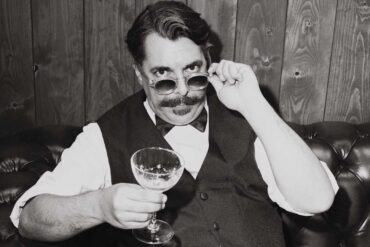

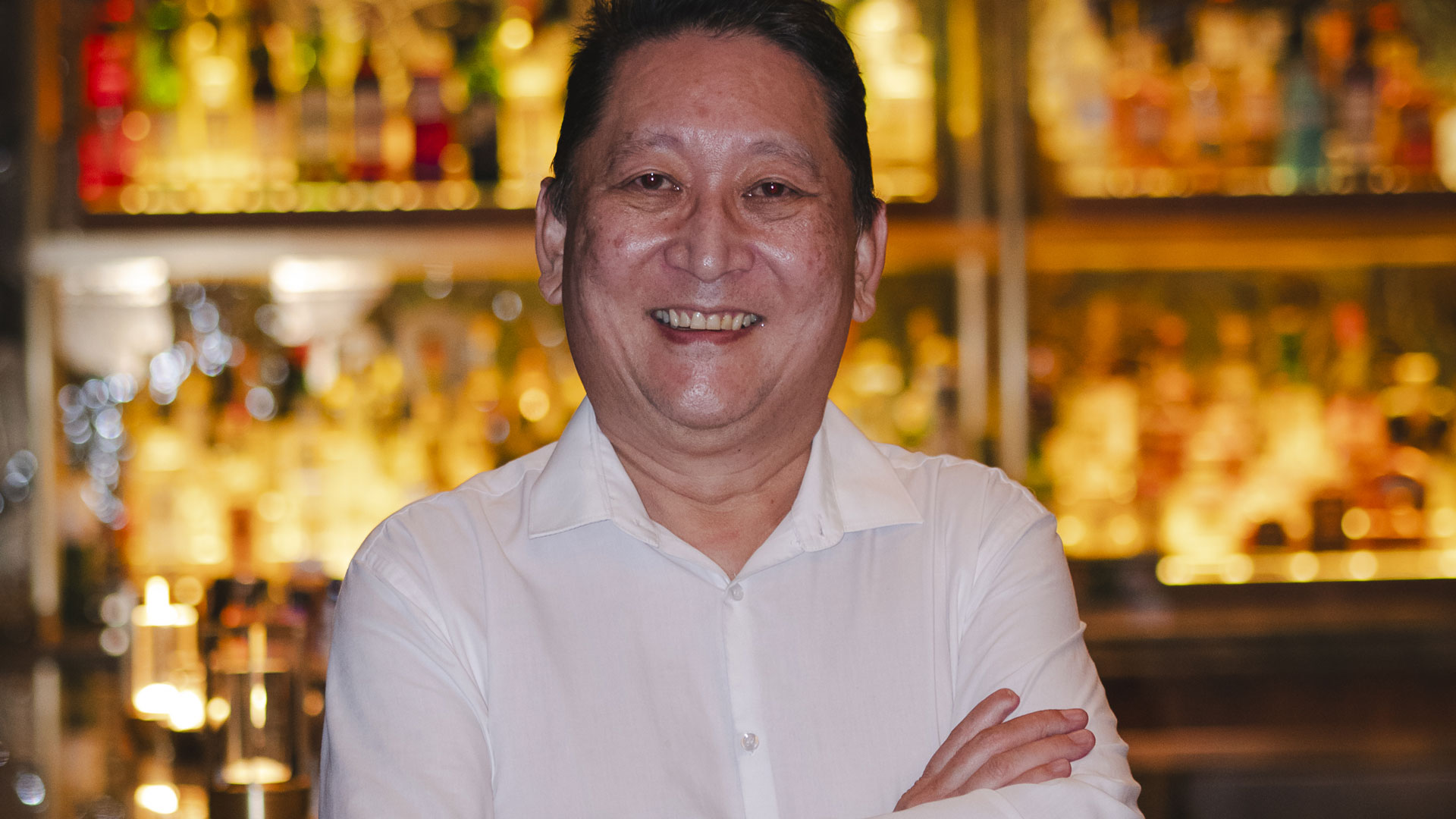
“I’m the most important person in the industry.” Said playfully, that line was enough for Marcos Toriyama to make his way into an exclusive party. “Three years ago I was in Singapore, and Atlas was hosting a celebration for the release of the new The World’s 50 Best Bars list. They asked for my invitation — I didn’t have one. They asked if I worked in the industry, and I said, in a way, yes. Then I added: actually, I’m the most important person.” The follow-up question was inevitable: why? “Because I drink,” Toriyama replied. “I said it as a joke, but they let me in. I’m the final link in the industry.” Which is no small thing.
Marcos Toriyama’s Passion for Cocktails
A few details help frame who he is. His grandparents emigrated from Japan to Brazil in the early twentieth century. “I’m basically the opposite of Coa in Hong Kong,” he says. “I’m a descendant of Japanese immigrants in a Latin country, while Coa is a Latin bar in the East.” As an adult, Toriyama began working in banking and traveling extensively, “I’ve been to 48 countries so far.” He frequented the world’s best cocktail bars and became not just a drinker, but an attentive, informed one — someone capable of offering a lucid reading of how Brazil’s bar scene has evolved over the past few decades.
How Brazil’s Cocktail Scene Has Evolved
His account begins with an economic and sociological observation. “In the 1990s Brazil went through a severe inflationary crisis, which meant we couldn’t import anything, no spirits, no whisky, no gin, nothing. Bars had to rely on Brazilian whisky and gin, which were terrible. And Brazilians mainly drank beer, with cachaça coming second.” When the economy stabilized, imports focused first on beer and wine. In that context, cocktails took hold very slowly. “In the early 2000s you could find no more than two or three brands of tequila or bourbon. Today, many bars are extremely well stocked.”
The shift came in waves. “First there was the gin wave. Then Spritz. Then Negroni. Then tequila. Everyone was drinking the same thing, but those trends started to educate people’s palates.” At the same time, bartenders began experimenting with the Caipirinha, the national drink, especially by playing with fruit — something Brazil produces in abundance. Twists appeared with different types of lime, or with pineapple. And the country’s vast food culture, not limited to fruit, encouraged “an integration between food and drink that goes beyond simple garnish and becomes part of the experience. It’s a trend I think will keep growing, unfortunately not very fast.”
The Recommended Bars in Brazil and Beyond According to Marcos Toriyama
Given the inflationary crisis of 1990 – 94 and Brazil’s enduring preference for beer, Marcos Toriyama believes the Brazilian cocktail industry needs to focus on younger drinkers. Older generations remain attached to different habits and are largely unmoved by novelty. That curiosity, he says, can be found at Vena Cosmopolitan Bar, Cala del Tanit, Sub Astor, Guarita, Tan Tan, and Elena — the first five in São Paulo, where he lives, the last in Rio de Janeiro. For those traveling the world, his advice extends further: Lady Bee in Lima and Bees Knees in Kyoto, “they’re fantastic,” Svanen in Oslo and Atlas in Singapore, “for the architecture.” And then: Penicillin in Hong Kong, Line in Athens, Zest in Seoul, Cochinchina in Buenos Aires, Mag Café in Milan, The SG Club in Tokyo. The list could go on. Passion, after all, grows with every drink.
The article first appeared on Coqtail – for fine drinkers. Order your copy here