
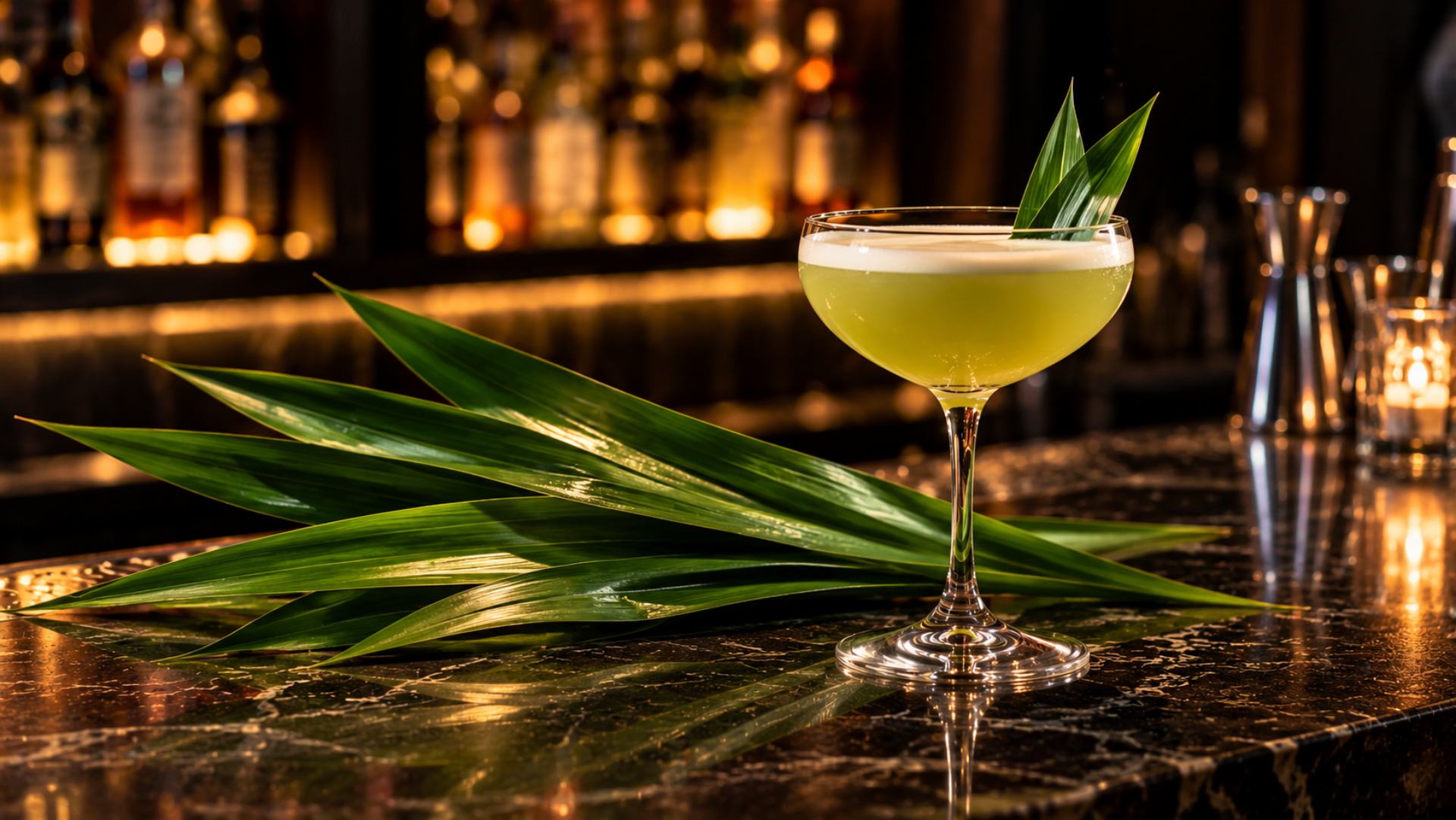
There was a time when pandan was virtually unknown in Western cocktail bars. Then came Nico de Soto, and the tropical plant began its ascent through the international cocktail scene. Today, more and more bar guests have tasted pandan, or at least heard of it. What makes its rise particularly interesting is its staying power.
According to de Soto, pandan shows little sign of losing momentum, and there is still considerable room for growth. Meanwhile, bartenders are already exploring ingredients that could become the next big thing. One of them is ube.
From Warm and Nutty to Fresh and Herbal: Pandan’s Many Sides

Perhaps pandan’s greatest strength is its versatility. Different extraction techniques can produce markedly different aromatic profiles, depending on the desired result. “You can use heat to extract the aromas from the leaves directly into a spirit or syrup,” de Soto explains. “This method tends to bring out pandan’s rounder, warmer qualities — the notes reminiscent of vanilla, coconut, rice and nuts.”
“Another technique is to blend fresh leaves directly into a liquid and then strain it. The result is completely different: a much fresher, greener, more herbal profile. I like this approach because it reveals another side of pandan, beyond the sweet, dessert-like character people often associate with it.”
Versatility and Balance
“When it comes to pairings,” de Soto continues, “pandan naturally works well with coconut, rice, dairy, vanilla and nuts, but it’s also interesting alongside tropical fruits, citrus and ingredients with more pronounced acidity. For me, the key is balance. Pandan has a very distinctive aroma, so you don’t need to use much of it. Sometimes it works best as a subtle background note rather than dominating the entire drink.”
Discovering Pandan
To understand pandan’s rise in cocktail culture, it helps to go back to 2008, when de Soto first encountered the tropical plant while traveling in Indonesia.
“I immediately realized there was something special about it. It had a remarkably persistent finish and a unique vegetal character that I couldn’t find in any other ingredient.” For a bartender, that kind of originality is particularly compelling.
Mace and Danico Lead the Way
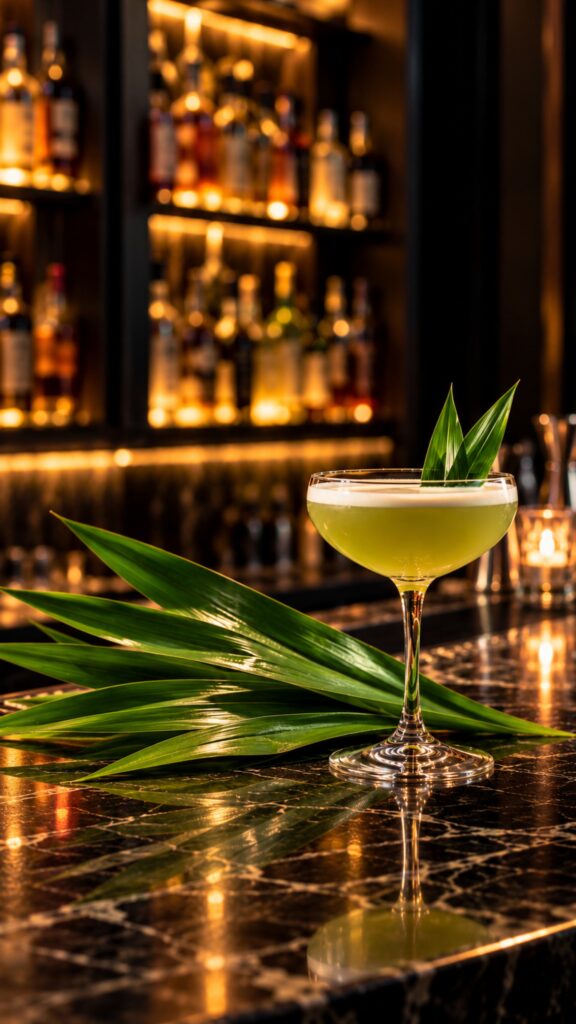
Pandan has been used in Southeast Asian cooking for centuries, and it was already available in major American and European cities when de Soto began experimenting with it. By around 2010, he was incorporating the ingredient into his early cocktail menus.
A few years later, pandan became a fixture on the menus of two bars that would earn places among the world’s best: Mace in New York, which opened in 2015, and Danico in Paris, which followed in 2016.
Part of pandan’s appeal coincided with a broader movement toward authenticity and a growing interest in ingredients with deep cultural roots. Pandan fit naturally into that conversation, carrying with it a culinary heritage shaped by the places, traditions and communities where it had long been used.
For years, ingredients such as yuzu, matcha and shiso, along with Japanese whisky, had dominated conversations about emerging cocktail trends. By the end of the 2010s, pandan was beginning to take center stage. “I think I played a role in the first wave that introduced pandan to Western mixology,” de Soto says. That may be an understatement. Many would argue that without him, the trend might never have taken off.
Pandan Goes Global
At that point, one of the few obstacles to pandan’s wider adoption was availability. “In the beginning, fresh pandan leaves were difficult to find in many places, so bartenders and customers didn’t necessarily know what pandan was or what it tasted like. Today, things have changed dramatically. Pandan has become much more familiar, particularly through pastries and desserts. In France, for example, it’s everywhere.”
Everywhere, though, is still a relative term. That accessibility gap was one of the reasons de Soto launched his own pandan liqueur in 2024. “Not every market has access to fresh pandan leaves, and not every bartender has the time or resources to prepare infusions or syrups. Having a ready-to-use ingredient makes that flavor accessible to many more people.”
What Comes Next? Perhaps Ube
For de Soto, pandan’s growing familiarity among bartenders is only part of the story. Its potential lies in reaching a much wider audience.
“It took a long time to get to this point, and there are still plenty of markets where people are only just discovering pandan. We have to remember that, as bartenders, we’re constantly searching for ingredients, including some that are quite unusual or relatively unknown. But the real world — our customers — doesn’t necessarily know all of them.” Meanwhile, bartenders continue to explore and experiment.
“It’s always difficult to predict what comes next. Ube, for example, is gaining a lot of traction right now. That’s probably partly because of its color and visual identity, but it also has a very interesting flavor. It’s definitely an ingredient on the rise. Still, you never know what the next big thing will be, and that’s exactly what makes this industry so exciting.”
AI-generated images, photo of Nico De Soto courtesy Handshake Speakeasy