
Tallinn, the capital of Estonia, sits outside the main routes of global mixology. That is a simple observation, not a judgment—but one that could shift quickly thanks to Mnemonic Bar, founded by Diana Tšistjakova and Daniil Didenko. Clear ideas, determination and talent have helped them gain recognition the right way, earning the respect of both the industry and their guests. Here, Diana Tšistjakova reflects on how the project began and where it is heading.
Mnemonic Bar: When the Business Plan Meets Reality
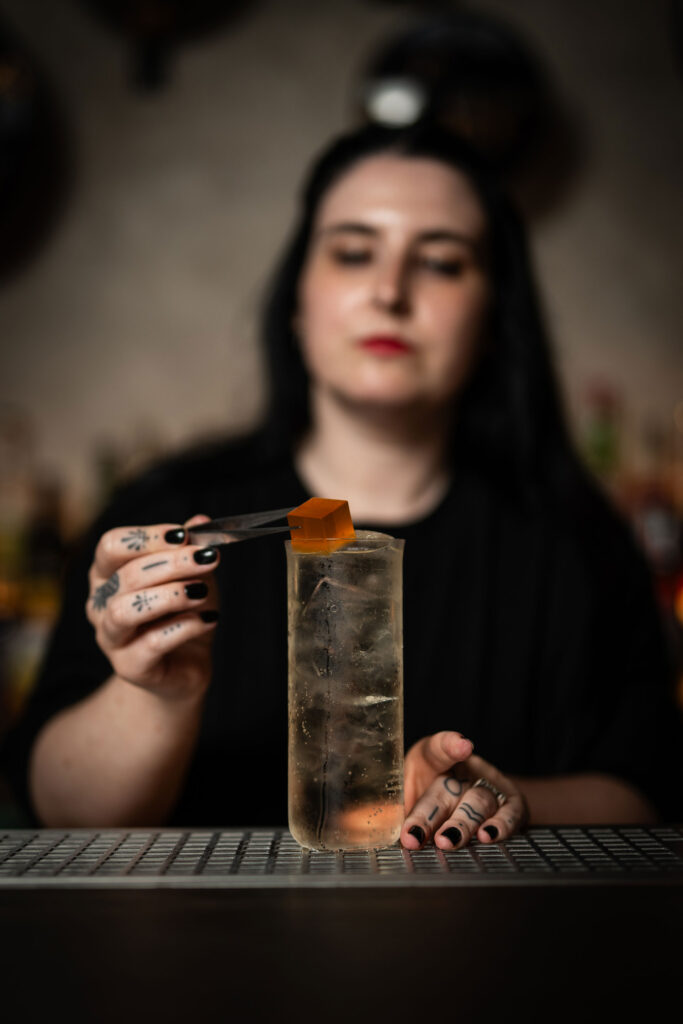
Opening a cocktail bar at an international level is complex. Doing so in a city that the global industry does not naturally gravitate toward is even more challenging. “The first thing you learn,” says Diana Tšistjakova, “is that your plan is not real. You can have a plan A, B and C, spreadsheets, moodboards, projections, even a perfectly prepared presentation—but reality will still come in and sweep it all away.”
The partners expected to secure investors quickly, find a location in a short time, begin construction in the summer of 2024 and open in the fall of the same year. “But the investor world is strange: people love saying yes. They love talking. They love your energy. But when it comes time to sign and commit, they disappear. Being ignored isn’t just something that happens in dating—it happens when you open a bar, too.”
Practical and Psychological Strain
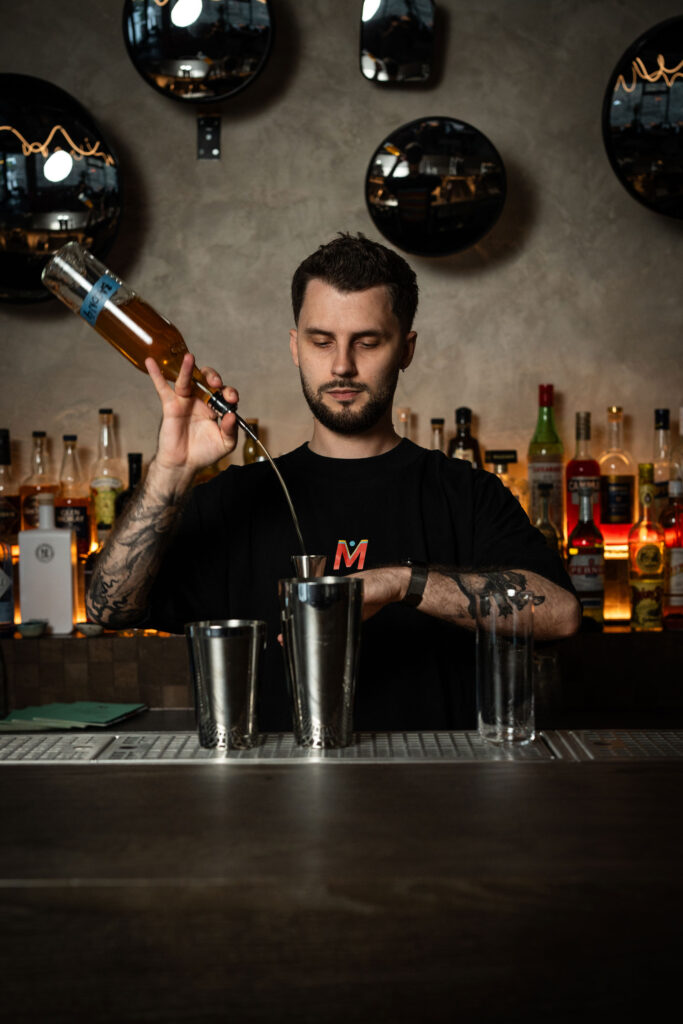
“When you don’t have a safety margin, delays become not just frustrating but risky. Every extra week of negotiations, every construction setback, every moment when something has to be redone becomes both financial and emotional stress. Your brain is calculating 24/7: how much does it cost? How long can we hold on? What happens if we don’t open next month?”
The hardest part is not only practical. “It’s what it does to your mind: decision fatigue becomes your default. You make hundreds of decisions every day, and most of them are between two imperfect options,” Diana continues. “You’re tired, your nervous system is on edge, and yet you have to be the one who stays calm and says: okay, next problem, let’s solve it.”
Mnemonic Bar: The Cost of Perfectionism
On the subject of mental challenges, Diana recalls one in particular. “Perfectionism nearly broke me. I had this idea that everything had to be finished and flawless before opening. At one point my partner Daniil looked at me and said, ‘If we keep waiting for perfection, we’ll never open.’ So we opened on December 26, 2024—not because everything was ready, but because opening imperfectly was better than burning out chasing an illusion of readiness.”
Opening Outside Established Circuits
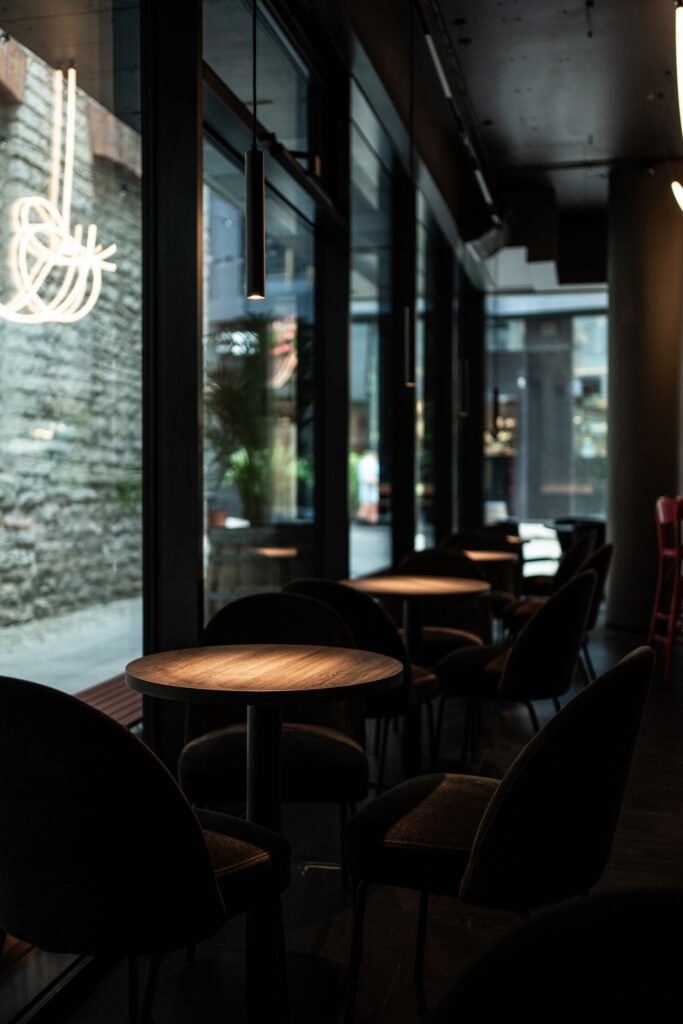
“In the Baltics, and especially in Estonia, things are often built with less focus on branding, smaller budgets, fewer ready-made opportunities and less automatic curiosity from the industry,” she explains.
As a result, “you can’t rely on external hype. You have to build your own visibility. No one will promote you just because you opened a bar. But that is also an opportunity: if your standards are consistent, the experience is memorable and you keep showing up with determination, people start talking, guests return and your network expands. Recognition in the Baltics is slower, but when it comes, it is earned and lasting.”
The Cocktail Scene in Tallinn and Estonia
Mnemonic Bar may have been a challenge, but it was not a leap into the void. It emerged within a context that already had potential. “Tallinn has talent—real talent. We have bartenders with strong technical skills, great taste, experience in international competitions and the ability to operate at a very high level. The frustrating part is that people don’t expect this from Estonia, so we are constantly pushing against that stereotype.”
At the same time, the Estonian cocktail scene “has had moments of real momentum. There were years, between 2016 and 2018, when everything seemed to accelerate: new cocktail bars, competitions, more training, greater visibility and community-driven initiatives like Tallinn Cocktail Week. It felt like we were building something concrete.”
The Risk of Settling
“I would describe our evolution as uneven. There are bursts of energy followed by long periods of stagnation. Estonia is a small market, and that affects everything: how many guests you can reach, how much money circulates, and how easy it is to become comfortable. Sometimes people reach a level where things are good enough and stop pushing—stop promoting their work or building long-term visibility. Not out of laziness, but because the ecosystem does not consistently reward ambition.”
Individual Effort vs. Collective Movement
Another key factor is brand support. In many countries, brands invest in training, travel, guest shifts and international exchanges. “In Estonia, we often feel on the margins of those budgets and opportunities,” Diana says. “That slows growth, because education and exchange are powerful fuel. Without that fuel, progress becomes an individual effort rather than a shared movement.”
Moving in the Right Direction
“Still, the direction is right. Guests are becoming more informed. People are more open to classics, quality spirits, balanced cocktails, aperitivo culture and lighter styles—not just sweet drinks or large servings. At the same time, Tallinn continues to value accessibility: people want quality, but they don’t want it wrapped in fine-dining seriousness.”
The outlook is positive, “as long as we keep building consistency: more collaboration between bars, more education, more guest talent, more guest shifts and greater ambition from bar owners. The spark is already there. It just needs more fuel and a stronger belief that Estonia deserves a seat at the table.”
Local Ingredients at Mnemonic Bar
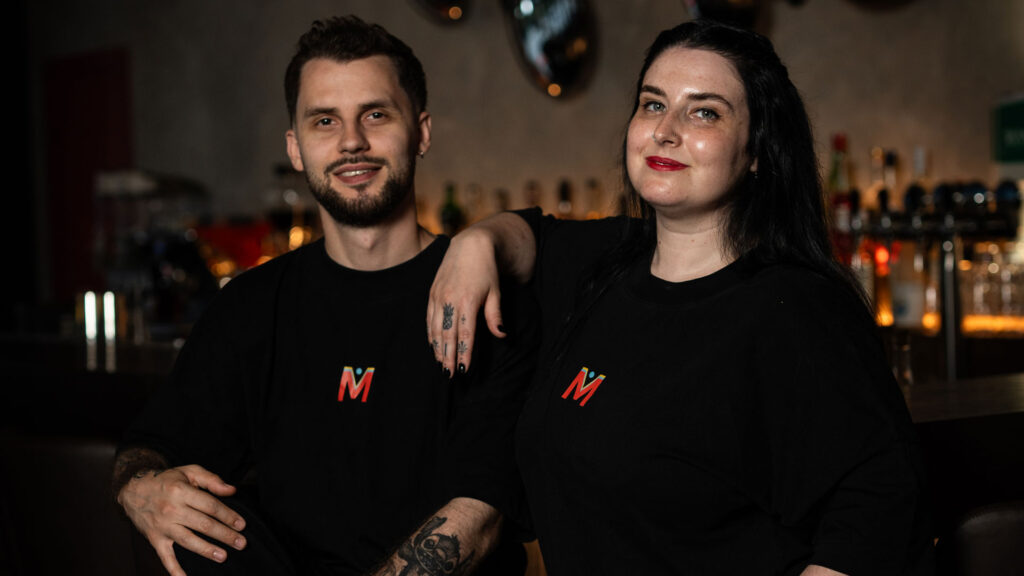
Mnemonic Bar opened on December 26, 2024, with a number of clear pillars from the outset. One of them is the use of local ingredients—handled with precision. “We want them to feel natural, not treated as a marketing tool,” says Diana. “For us, ‘local’ is not something you sprinkle on top of a cocktail to make it look more sophisticated. If it’s there, it has to earn its place in the flavor.”
An example? “Our CANlab project: we used Estonian rhubarb in Bitter Rhubarb, an aperitivo built around bitter following the logic of the Americano. The rhubarb brings a lively, vibrant note that makes the drink lighter and more refreshing. It’s not there to shout ‘Estonia!’—it’s there because it genuinely makes the drink better and more memorable.”
The CANlab Project
CANlab requires some explanation. “It’s our in-house ready-to-drink program. Everything is done at Mnemonic Bar: batching, carbonation, sealing, labeling. We sell the cans through a cocktail vending machine. It’s a way to make a properly crafted drink immediately available—something you can grab as soon as you walk in or take home. And it is built around bitter as a core ingredient,” she explains.
“This is the same approach we want across the bar: seasonal flavors that belong to our climate and our food culture—things that feel authentic and rooted. And when we work with local spirits or liqueurs, it’s because they meet the same standards we apply to everything else: balance, quality and consistency.”
The Potential of Estonian Products
As for gaining global recognition for Estonian products, Diana Tšistjakova says: “Our goal is to create proof of concept. When a local ingredient or product performs well in a high-quality cocktail and draws attention, it shows what is possible. And when projects like CANlab get noticed beyond Estonia—as happened thanks to the interest of a major brand—it signals that interesting things are coming from this region, even if we are a small market.”
Global recognition does not come from being local alone. “It comes when the quality is undeniable and the story is clear. If our work contributes, even in a small way, to promoting consistency, confidence and visibility, then yes, I am proud of that.”
A New Drinking Culture with Mnemonic Bar
Mnemonic Bar is shaping Tallinn’s drinking culture in a simple but meaningful way. “We are humanizing high-end craft. Mnemonic is our love letter to the kind of bar we always wanted: a real neighborhood spot—gritty, with music, laughter and warmth—where no one acts like a know-it-all, but the drinks are excellent. We call it a modern dive bar because it has that spirit: you walk in, take a seat, no reservations, no pressure, no need to know the rules. You can be loud, relaxed, even a bit messy. But the drink still has structure, balance and care.”
This approach changes how people order, because it removes the need to perform. “Guests stop choosing ‘safe’ options out of fear of looking foolish. They ask questions. They try classics they’ve heard about but never ordered. They become curious, because the environment gives them permission to explore without being judged.”
Making Quality Drinking Feel Natural and Fun
“In Estonia, there is still a strong culture of straightforward social drinking: beer, long drinks, spirits with mixers, shots—a direct, let’s-have-fun energy. That is a reality and it won’t disappear. What is changing—and faster than expected—is curiosity. There is a growing audience looking for more refined flavors: balanced cocktails, aperitivo, agave, amari, low-ABV options and properly executed classics.”
Mnemonic Bar positions itself in between. “We respect how people drink here, but we gently elevate it—better balance, better ingredients, more refined structure, without turning it into a lesson. If someone wants a quick drink and a moment of fun, we give them that. If someone wants a deeper conversation about cocktails, we offer that too. The point is: we make quality drinking feel normal and enjoyable.”
International Recognition for Mnemonic Bar
Mnemonic Bar has already earned significant recognition, including Best Bar in Estonia at the Baltic Wine & Drinks Awards 2025, as well as awards for two CANlab RTDs at Best Estonian Drinks 2025. “It was a huge milestone because it was about taste. There were 217 entries from 57 producers, judged blind, and our products stood out. That’s the kind of recognition you really feel.”
Achieving these results so soon after opening “was a defining moment—not just because it was exciting, but because it felt like a statement: we exist, and we are building something worth knowing,” Diana adds.
“Coming from Estonia, it often feels like you have to shout twice as loud to be noticed, so being on those stages mattered. But I’m also proud that the attention is coming for the right reasons—not because we’re a small, charming bar from a small country, but because the work stands on its own. That’s the kind of attention that makes you think: maybe this small, slightly odd idea from Tallinn can go further than we expected.”
A Distinctive Drink List
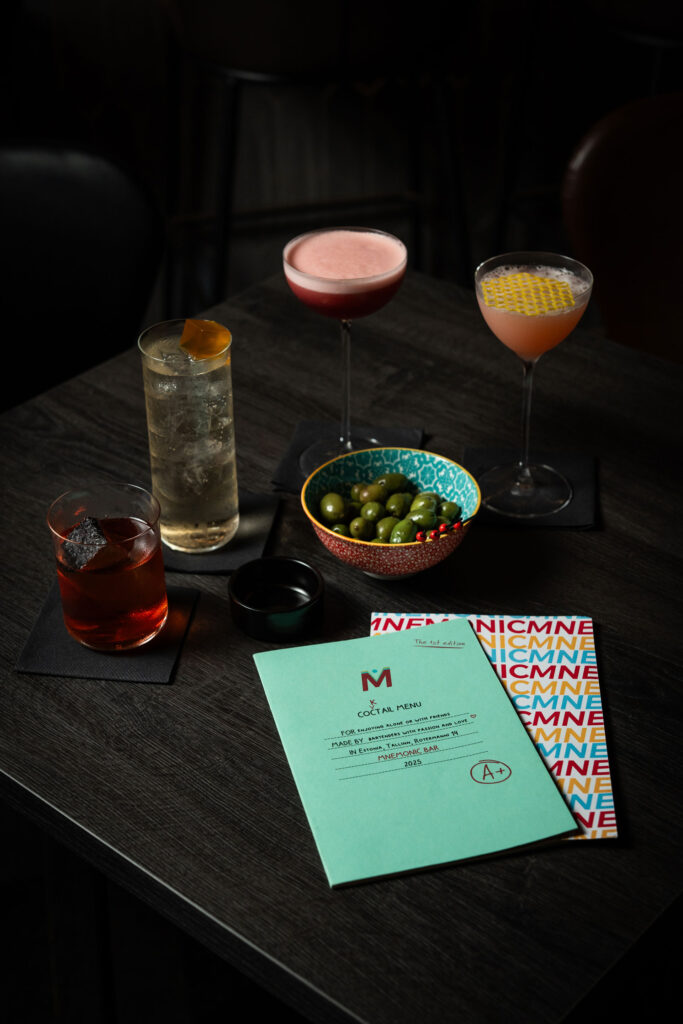
Mnemonic Bar’s drink list is presented like a school assignment written on squared paper, complete with corrections, comments and even an overall grade—A+, naturally.
“It looks like a school notebook,” Tšistjakova says. “Scribbles, arrows, pasted notes. For us, it represents a shared memory. For many guests, it brings an immediate sense of nostalgia, especially for those who grew up with Soviet-style notebooks. Even younger guests connect with it—everyone recognizes that energy: margins, scribbles, rules not quite followed, the strange familiarity of that format. People smile before they even order, and that creates a connection.”
When shaping the menu, “we kept coming back to this idea: the best nights aren’t remembered because the garnish was expensive. They’re remembered because something clicked. A smell. A flavor. A silly joke. A song you forgot you loved. That first sip that makes you look at your friend and say: okay… this is really good. We wanted the drink list to create those moments where something clicks in people’s minds.”
And it helps that the result feels playful, because “we take the drinks seriously, but we refuse to take ourselves too seriously.”
Bold, But Controlled
Contemporary techniques are used only when they genuinely improve the cocktail. “So you’ll find combinations like mezcal with eel and kiwi, bourbon with black garlic, tequila with gorgonzola and melon, vodka with wasabi and condensed milk. They sound bold—and that’s intentional. The goal is to create a flavor that lingers, something you remember the next day and want to talk about.”
The menu invites exploration—“like a notebook you had forgotten. That mix of curiosity and nostalgia is exactly the point,” Diana concludes. “We want to give people those small, lasting moments: a flavor you don’t forget, a pairing you have to tell a friend about, a laugh at the bar, a sip that makes you say: wait… let me try that again.”
Photo courtesy Mnemonic Bar