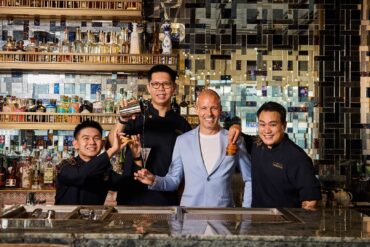

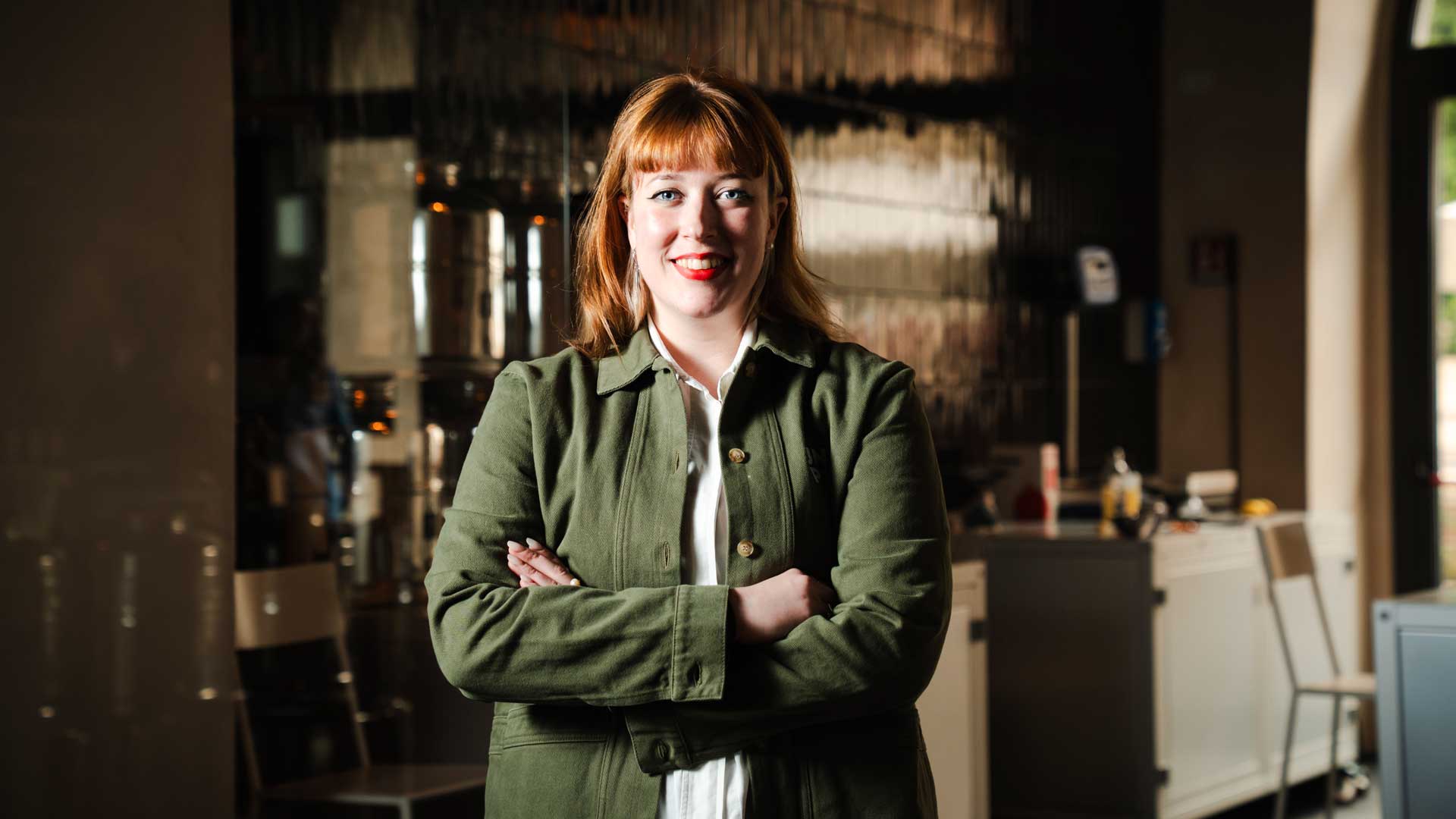
A study in restraint, precision and cultural storytelling earned Asia Abballe the top spot at the Italian semifinal of the JNPR Cocktail Competition. The bartender from Mag La Pusterla was announced the winner on April 29 at Tripstillery Navigli in Milan, where the bar hosted an event dedicated to non-alcoholic drinking. The jury included Giovanni Allario, Bar Manager at Moebius and Lubna, Martina Bonci, Bar Manager at Gucci Giardino, and Penelope Vaglini, co-founder of Coqtail.
“I tend to struggle with anxiety,” Abballe said moments after the announcement. “This is only my second competition, but by rehearsing over and over, working on timing and making the storytelling fluid, I managed to get through it. The emotion right now is overwhelming.” Her next stop is Paris, where she will compete alongside runner-up Robert Iaboni for the international title — and a place at the Tokyo International Bar Show in 2027.
JNPR and the First-Ever No-Alcohol Competition
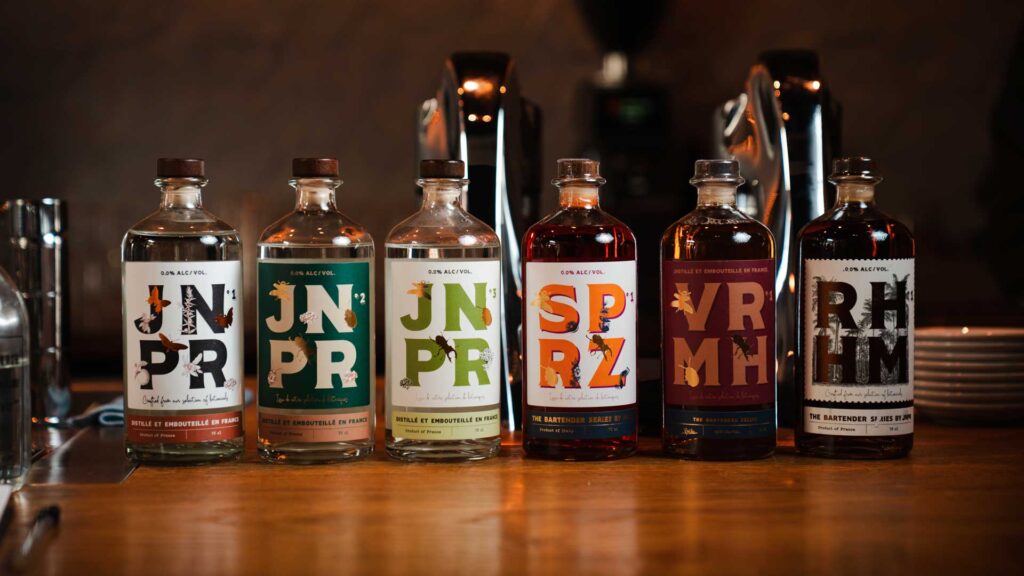
A French brand dedicated to non-alcoholic spirits, JNPR was created to offer credible, structured alternatives to mixed drinks through a range of expressions with distinct organoleptic profiles. The lineup begins with JNPR n°1, 2 and 3, defined respectively by notes of juniper, ginger and verbena, followed by SPRZ n°1 with hints of sweet and bitter orange and mandarin. BTTR N°1 stands out with layers of bitter orange, gentian and spices, while RHHM n°1 reveals notes of molasses, cocoa and vanilla. Finally, VRMH n°1 delivers a grape-forward bouquet lifted by a gently spiced profile.
A pioneer in zero-proof mixology, JNPR was the first brand, two years ago, to launch a competition dedicated to no- and low-alcohol drinks. For the latest edition, with more than 350 applications received, the message is clear: the category has become central to the evolution of mixology.
A format built on discipline
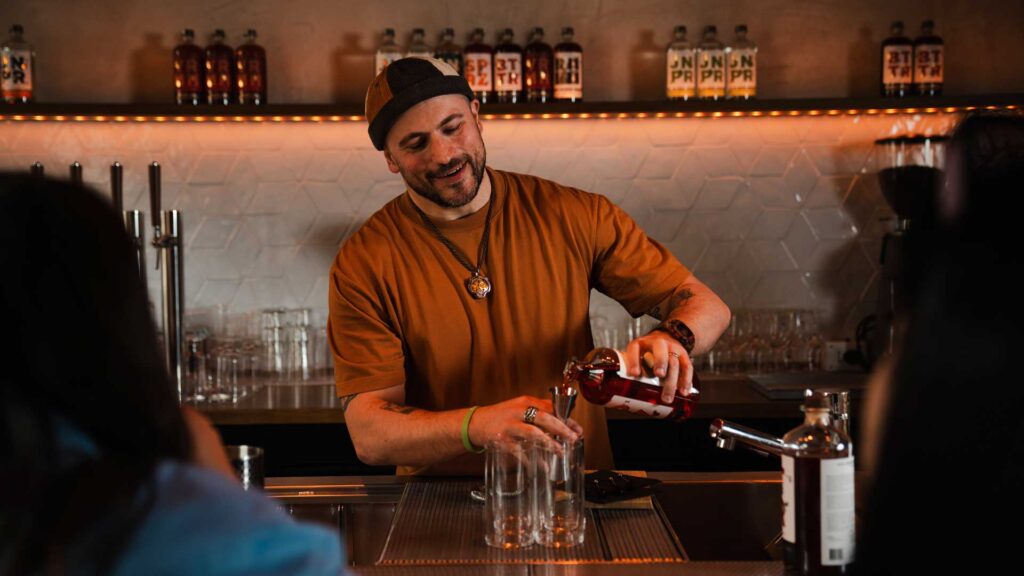
The 2026 edition of the JNPR Cocktail Competition places non-alcoholic mixology at the forefront, asking bartenders to work within a framework defined by balance, technical precision and visual coherence. This year’s theme, “Kata: The Perfect Form,” draws on the Japanese concept of repetition as a path to mastery.
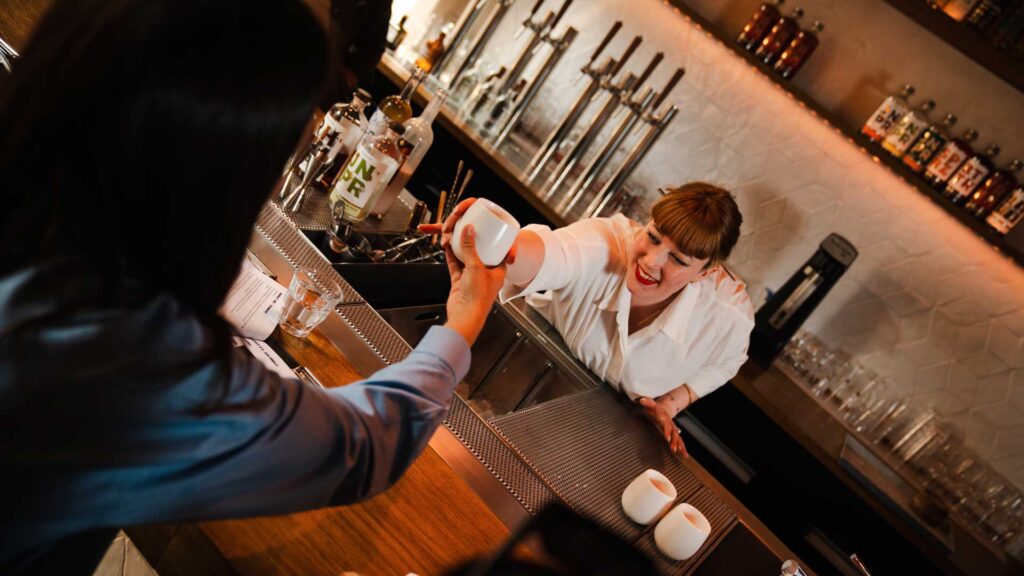
Competitors were required to develop two cocktails. The first, Essence, focused on creative interpretation and cultural depth. The second, Code, shifted the emphasis to technique, with constraints that pushed participants toward specific approaches—clarification, texture, smoke, or a tightly structured four-ingredient build. Both drinks had to remain strictly 0.0% ABV and center on JNPR products.
A method shaped by research
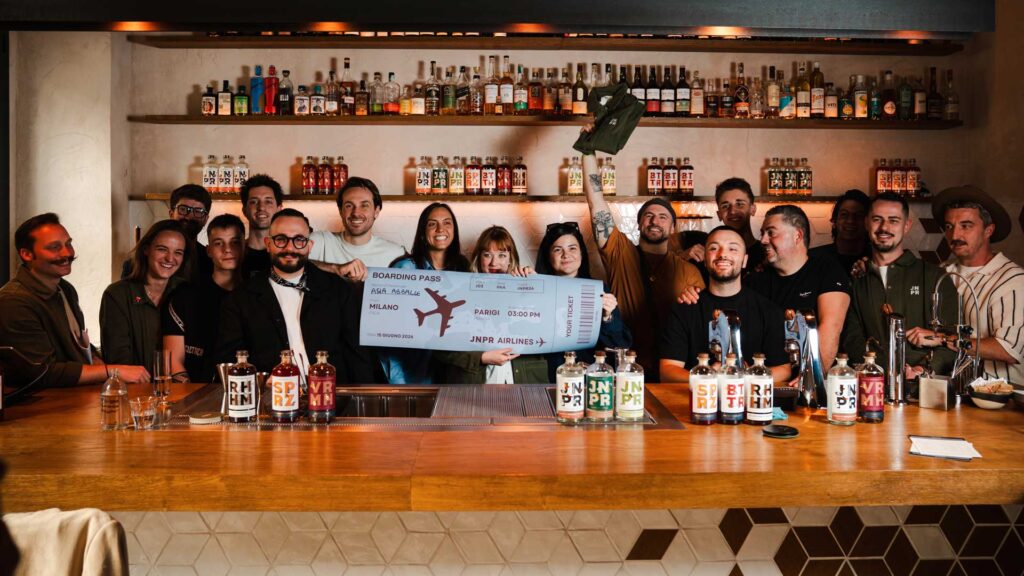
Asia Abballe approached the brief with a methodical mindset. Preparation lasted roughly six weeks, structured around daily refinement. “I looked into every single detail,” she said. That process extended beyond recipe development, starting from the choice of glassware and moving into ingredient selection and cultural research.
Japan became a framework rather than a reference point. “I studied the history and built the ingredients around that path,” she explained. The same clarity informed her use of JNPR, which she describes as “a very elegant brand, from the bottle to the ingredients.” Her focus settled on JNPR n°3, valued for its freshness and structure: “the verbena has an incredible aroma, with a slight bitterness that helps balance everything.”
Working without alcohol
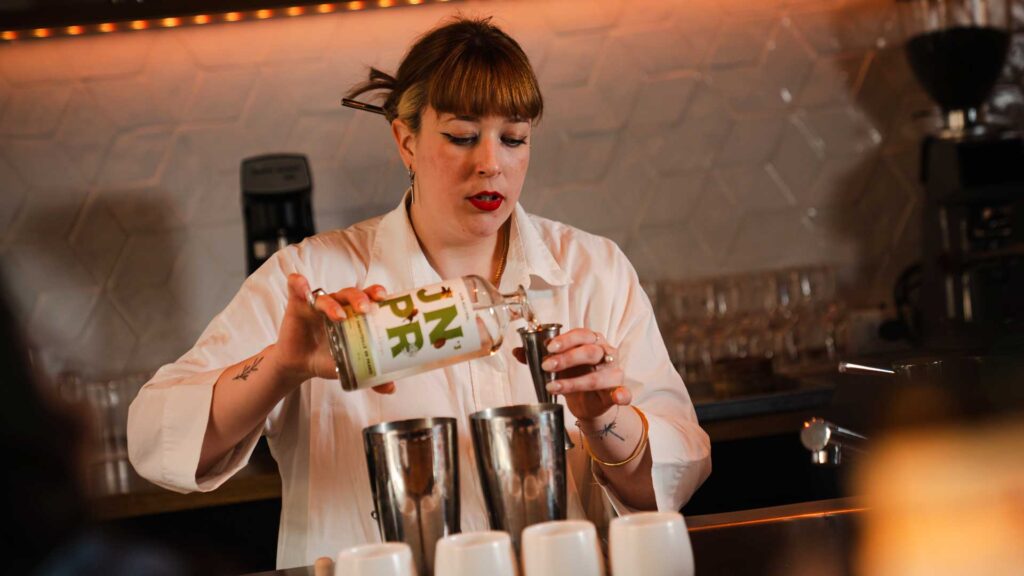
Non-alcoholic mixology remains a technical challenge. “Finding the right balance wasn’t easy at the beginning,” Abballe admitted. Without ethanol as a structural backbone, every component has to be calibrated with greater precision. At the same time, she sees these products as versatile tools. “They’re also interesting within alcoholic builds—as a way to dilute or to add another layer to a drink that’s already complete.”
Essence Aishira, a study in transformation
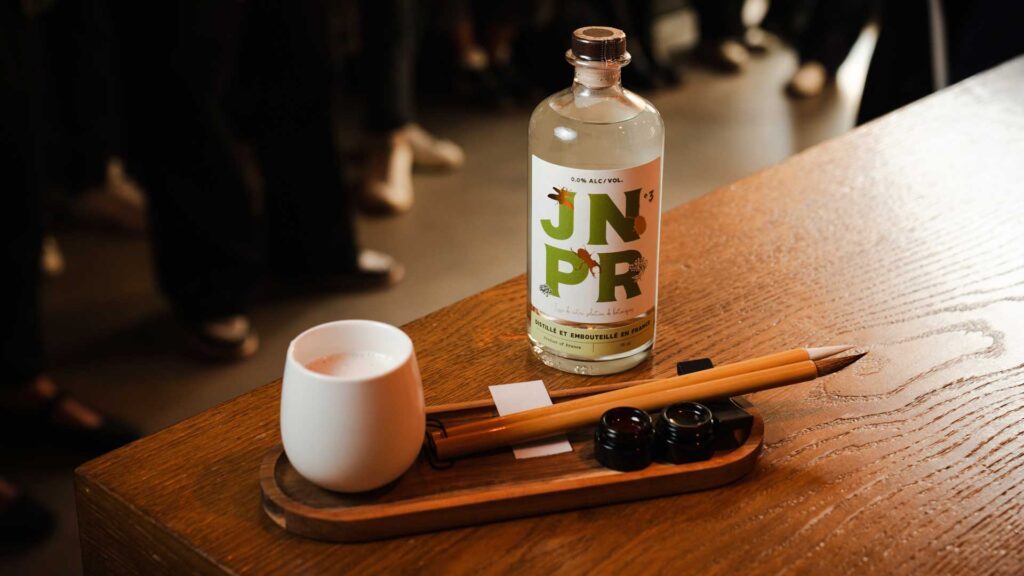
Her first cocktail, Aishira, interprets the idea of beauty as the result of discipline and transformation. The reference is the ritual of geisha makeup, structured around three symbolic colors: white, red and black. The white of oshiroi suggests purity, red signals youth and protection, while black introduces maturity and definition.
JNPR n°3 runs through the drink as a unifying element. The base is built in an orgeat-style format, combining soy milk, rice milk and azuki bean paste, with lychee adding a lifted, aromatic edge. The texture is achieved through blending, while the garnish—painted in cherry and black sesame on a rice sheet—extends the narrative into a final, tactile gesture before the sip.
The Silent Clear Kin Kai, clarity through contrast
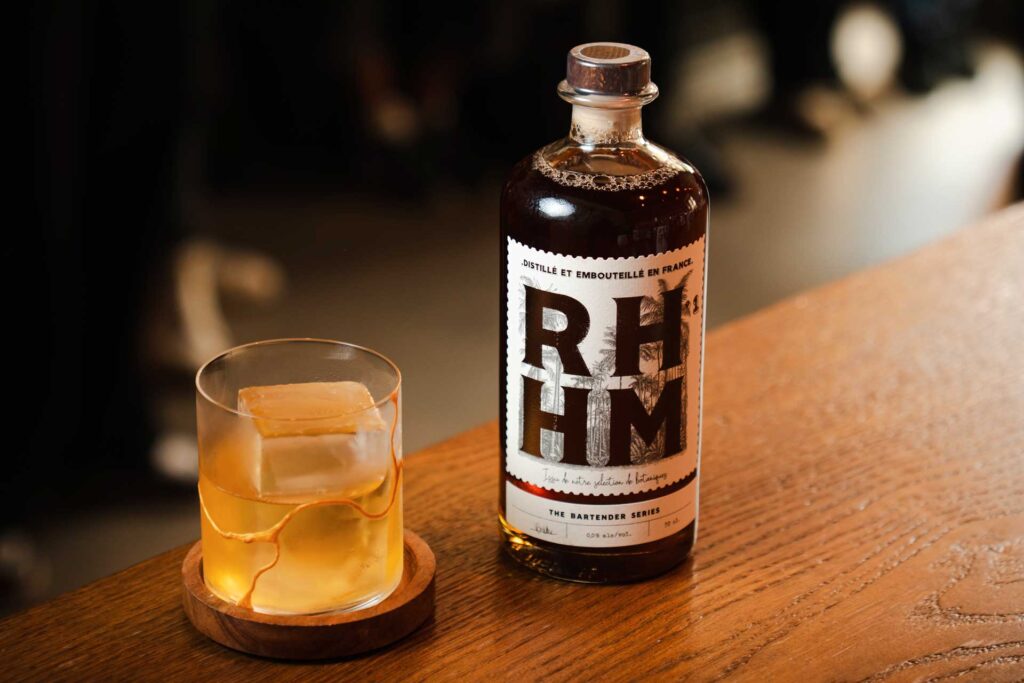
If the first drink is about construction, the second moves toward deconstruction. The Silent Clear Kin Kai explores contrast, drawing on the idea of beauty in imperfection. “I wanted to create a clear opposition, inspired by kintsugi,” Abballe said, referring to the Japanese practice of highlighting fractures rather than concealing them.
Honey and goat cheese form the core tension of the drink—two ingredients rarely paired, brought into alignment through structure. The non-alcoholic distillate RHHM n°1 acts as a binding element.
The technique is milk washing, used here to achieve full clarification. The base blends RHHM n°1 with acidified apple juice, lemon juice and a pear-infused honey. Once combined with a milk mixture and filtered, the result is a transparent liquid that carries a layered but precise aromatic profile. The drink arrives clear, but its construction remains deliberately complex.
Next stop, Paris
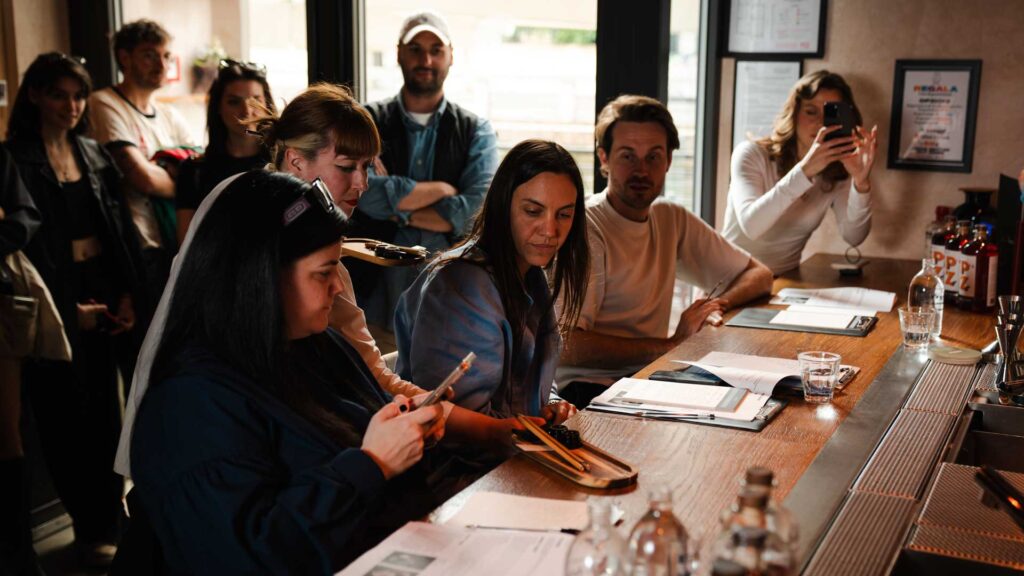
With the Italian semifinal behind her, Asia Abballe now moves to the final in Paris, where the competition will bring together top bartenders from across participating countries. Her approach is unlikely to change.
The focus remains on control—of flavor, of technique, and, as she made clear from the start, of everything that happens before the glass even reaches the bar.
Foto di Emanuel Florentin x Coqtail – all rights reserved
In partnership with JNPR