
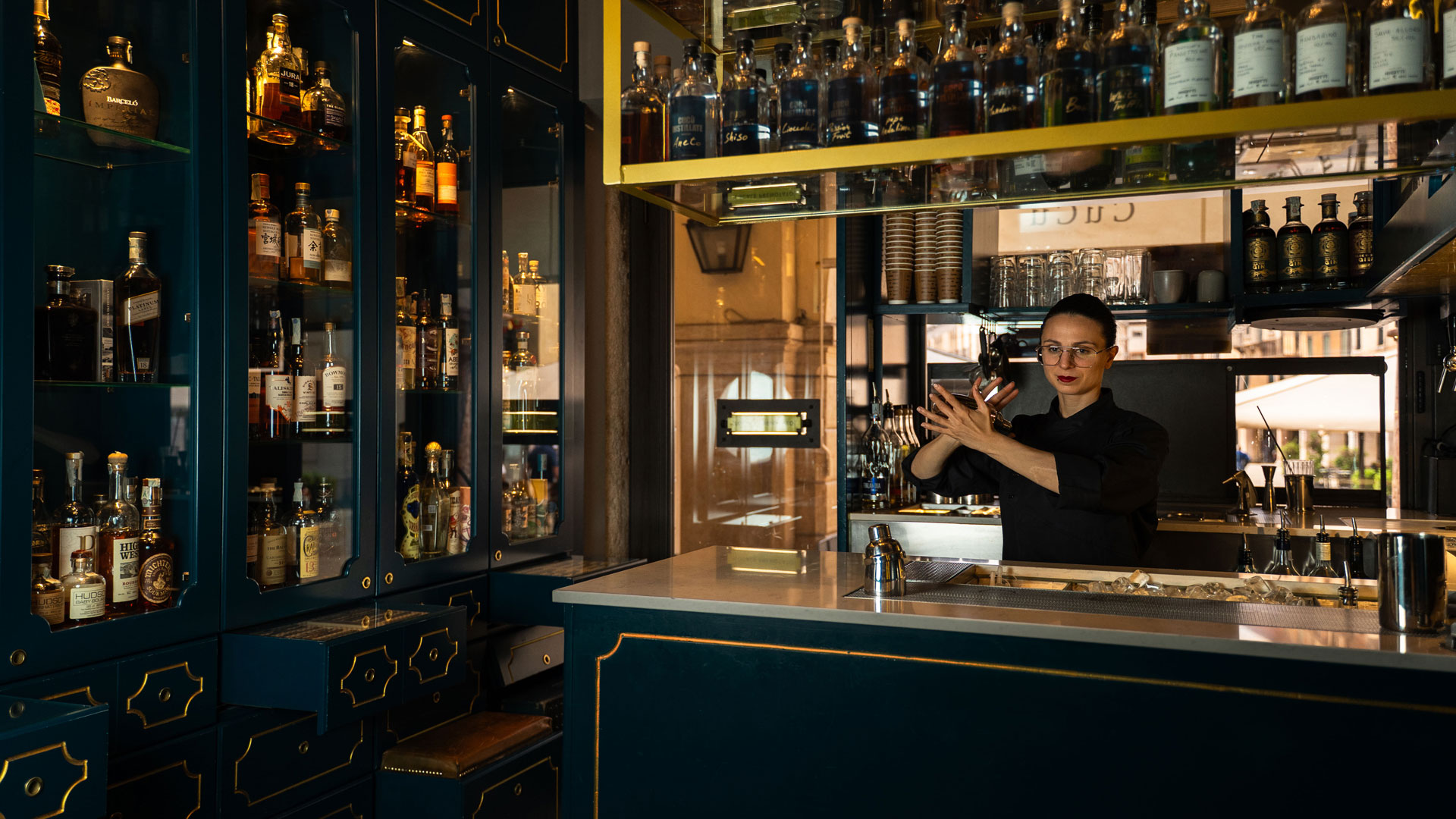
Guests who walk into a bar without a clear idea of what to drink will find an answer at Cucù in Bassano del Grappa. It’s called Mirror, a cocktail built around the guest’s tastes and habits. For those who prefer a more traditional approach, the new Pantarei menu by bar manager Elisa Favaron features 13 drinks—both low- and no-alcohol—designed to suit a wide range of preferences.
At Cucù, Indecision Becomes an Order
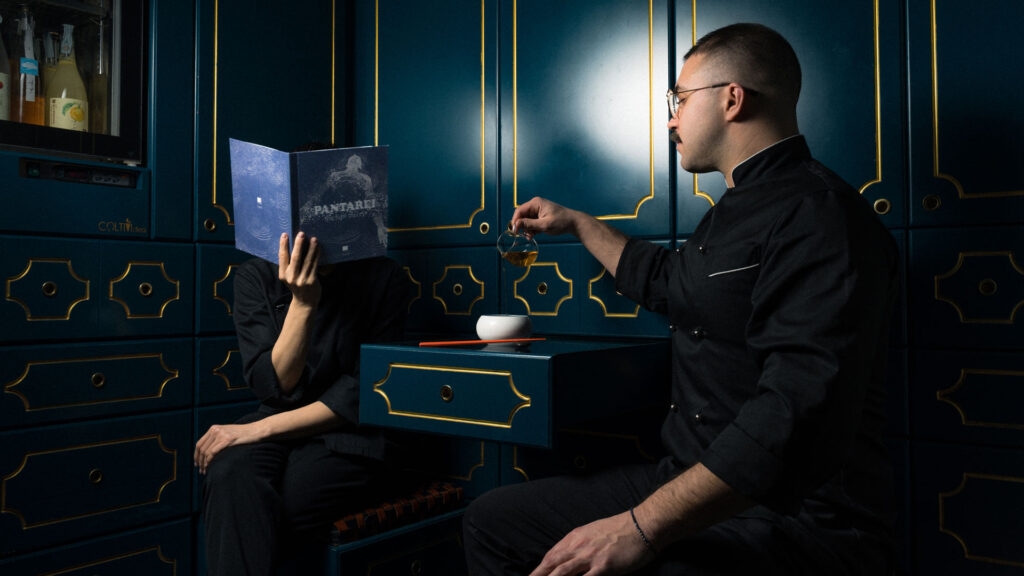
It happens often. Someone steps in, scans the menu, pauses, then delivers the line every bartender knows: “Up to you.” In the compact space of Cucù — just 12 seats in total — Favaron has turned that moment into a drink. Mirror, she explains, “is the beating heart of the Pantarei menu, which includes eight highly drinkable alcoholic cocktails, five non-alcoholic options and, of course, one tailor-made creation.” Her background spans both mixology and pastry, with a sharp focus on guest experience.
How Mirror Works
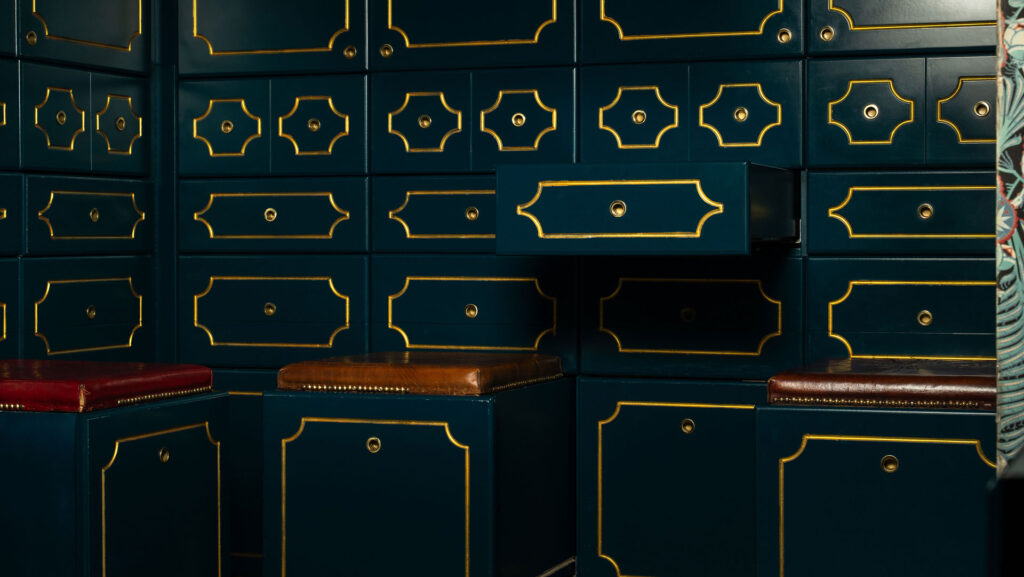
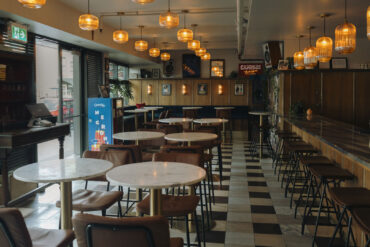
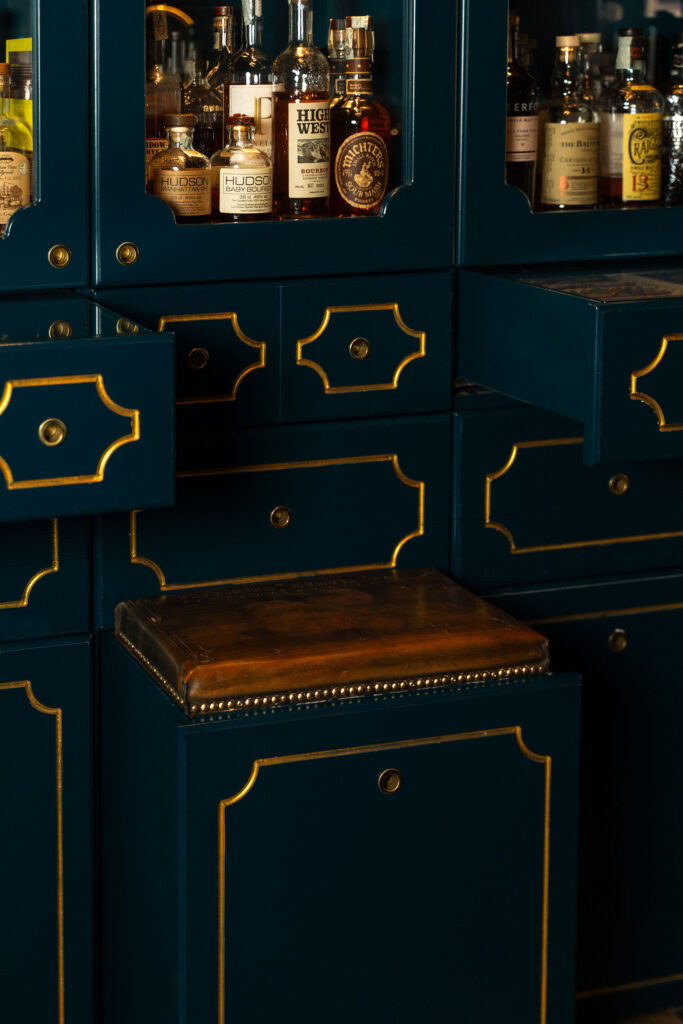
Cucù occupies about 20 square meters inside what was once a watchmaker’s workshop in the historic center of Bassano. Every element is designed to encourage interaction: limited seating, a central counter, components that slide and disappear like mechanical parts. Here, the exchange with the guest becomes part of the service. “Mirror reflects the person in front of me. From what they share about themselves and their preferences, I understand what they’re looking for and can guide them toward the right drink.”
The key lies in reading habits and desires — even when they remain vague or are expressed in generic terms. “Giving it a name and placing it on the menu acknowledges Mirror as a cocktail and gives weight to the guest’s uncertainty.”
Cucù: unexpected results
Each Mirror is different, shaped through conversation. Favaron starts with simple, practical questions: what someone usually drinks, what kind of sensation they’re after in that moment, whether they lean toward spice, citrus or fruit, or prefer a lighter or more structured profile. “Many people use words that mean something different to us bartenders,” she says. “When someone asks for a ‘dry’ drink, they’re often looking for something fresh, clean, perhaps more acidic.” From there, the real work begins: translating the guest’s language into a coherent glass.
Sometimes, the outcome hinges on a small detail. Favaron recalls a guest who wanted something without sugar or any sense of sweetness. “I translated that into a proposal built on Irish whiskey, because its softness and clarity could better respond to that request.” In other cases, Mirror has taken the form of a wine-based cocktail, a sake-driven serve, or a drink built around a spirit the guest already enjoys — or even a single ingredient that steers the conversation. “I like sharing the process with the person in front of me,” she says. “For me, a drink can also be built together.”
Trust, Before Technique
Over time, the process becomes more intuitive. “Regulars walk in and say, ‘You take care of it — you always get it right.’ That’s when you know the system works. It builds total trust. At that point, the drink almost becomes secondary to the relationship.” That trust also changes how the menu is approached. “Many guests try everything in the early days, then rely on us completely. The list gives direction. The real work happens at the counter.”
The Drinks that Stand on their Own
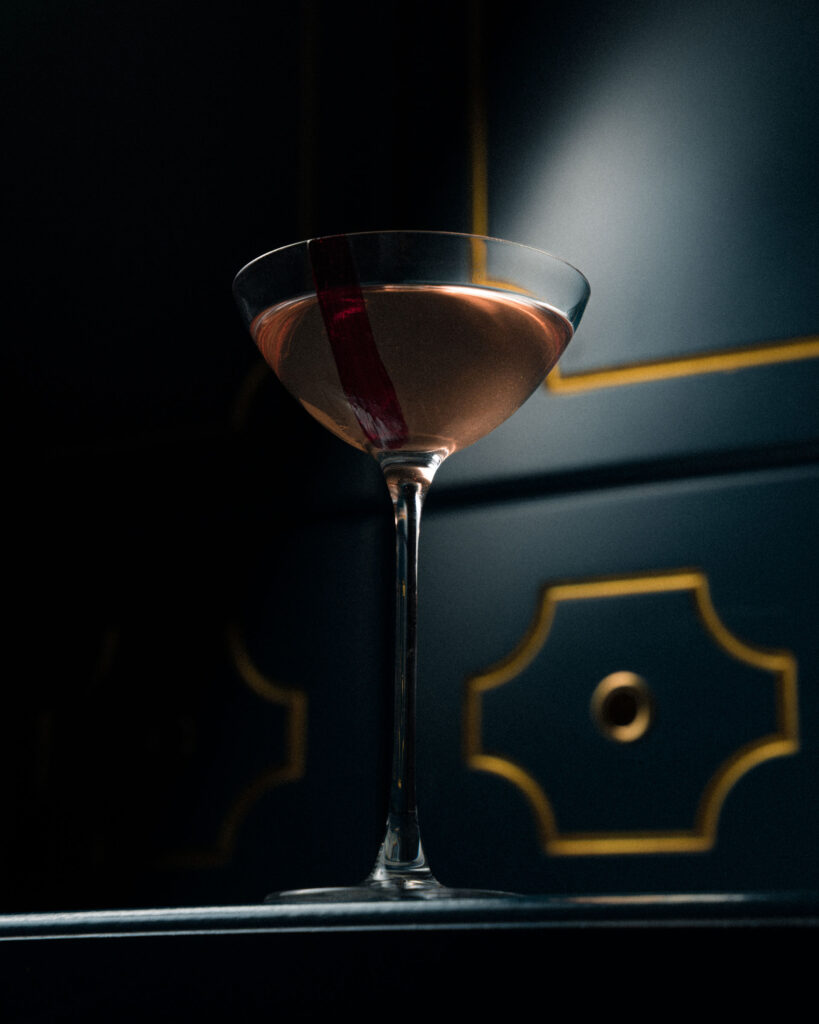
Within this framework, the 13 cocktails — alcoholic and non-alcoholic — on Pantarei serve as accessible entry points, even for those arriving without a clear idea. “Pantarei translates balance, movement and transformation into a series of drinks, avoiding extreme alcoholic peaks and focusing on a precise equilibrium of ingredients.”
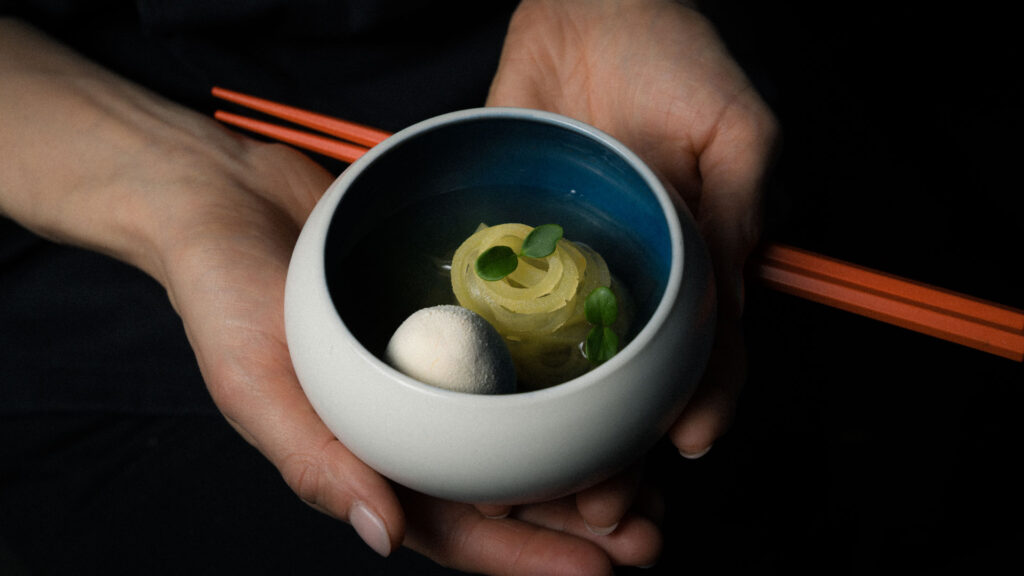
One of the most representative is Miyamoto Musashi, inspired by the legendary Japanese swordsman. “It presents as a kind of ‘false ramen.’ The broth is built with two types of sake, while the noodles are made from apple compressed with yuzu and coconut. The egg yolk is reimagined as a white chocolate and vanilla ganache with a passion fruit core.”
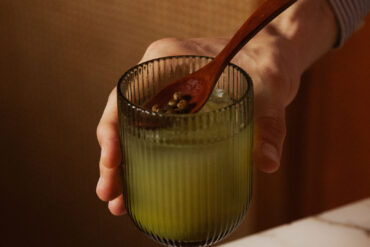
Clear Line, meanwhile, “works on purity of flavor and the memory of fragola grapes — a note tied to Veneto’s collective past.” In the glass: shiso-infused vodka, a rosé and Andaliman pepper cordial, and a clarified reduction of fragola grapes.
Elisa Favaron’s Cocktails at Cucù
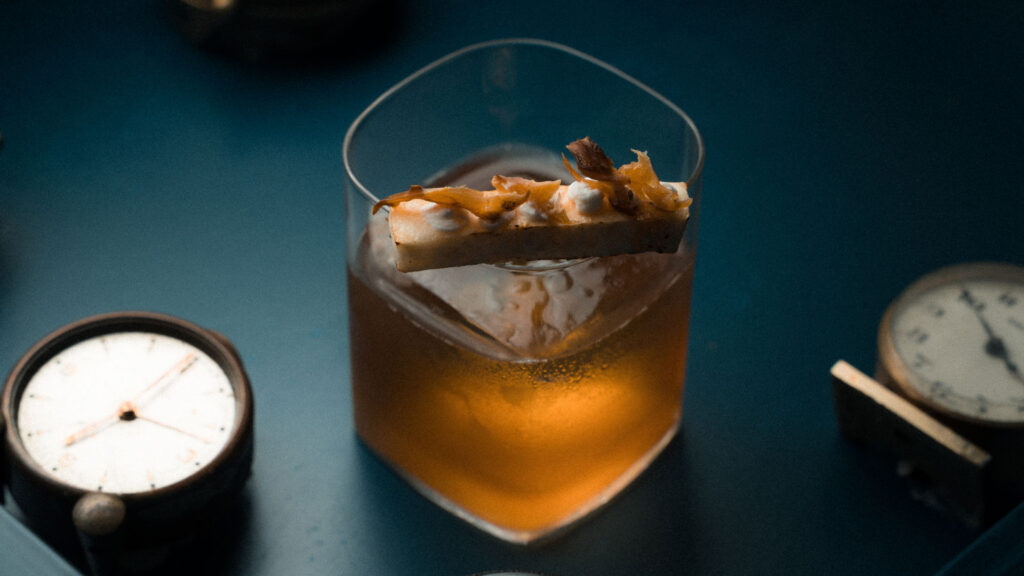
Then there is Bushido, developed with co-manager Jacopo Lancerin, built around celeriac, miso and honey, exploring deeper umami territory. It is served with seared celeriac, robiola cream and a plant-based take on katsuobushi created through dehydration.
Black Soul moves into darker tones. “A peated single malt Scotch whisky undergoes a coconut oil fat-washing, paired with a spiced cordial recalling gingerbread, mace and orange peel.” Alongside the drink, a chocolate praline echoes the same aromatic profile.
Freedom introduces a true pairing between cocktail and pastry. “The drink combines rum, local honey and mead, served with a dark chocolate cream that amplifies the aromatic depth.” The menu also includes five non-alcoholic options—Destination, Yourself, Aware, Weather, Istant—“all rebalanced and reconstructed along the same aromatic lines as the alcoholic drinks, without the spirit component.”
If the question remains what to order, the answer is straightforward: the one you’ll enjoy. The rest happens at the bar.
Images courtesy of Cucù