
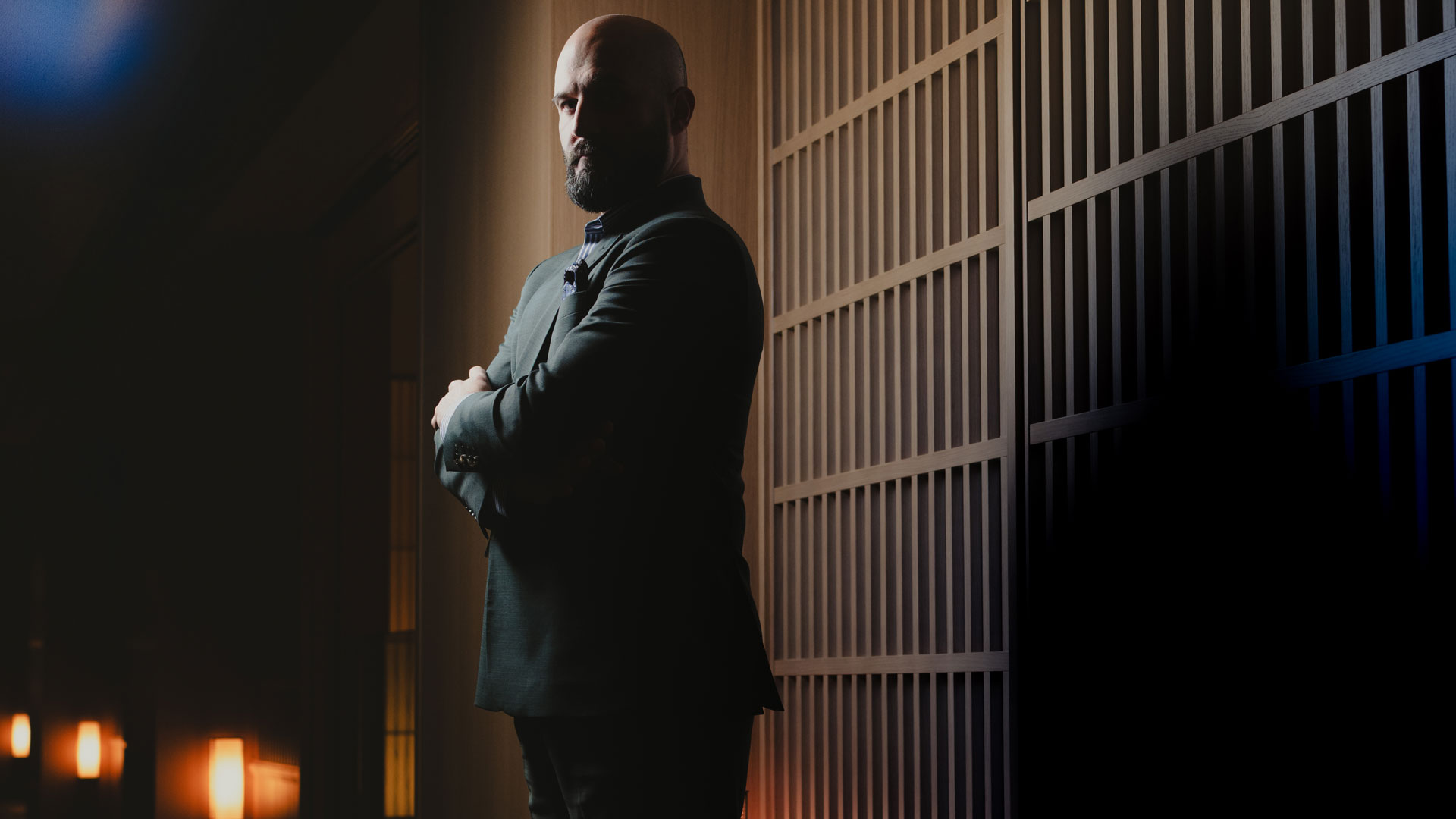
“Labels can be useful, but they can also be limiting. In our industry, there is always a tendency to put people into categories: bartender, manager, creative, Italian bartender abroad, luxury hospitality, classic or contemporary,” says Mario la Pietra of Capella Kyoto, the latest chapter in a career that has taken him across some of the world’s most ambitious bar programs. “In the end, being labelled is inevitable.”
Mario la Pietra and the Meaning of Labels
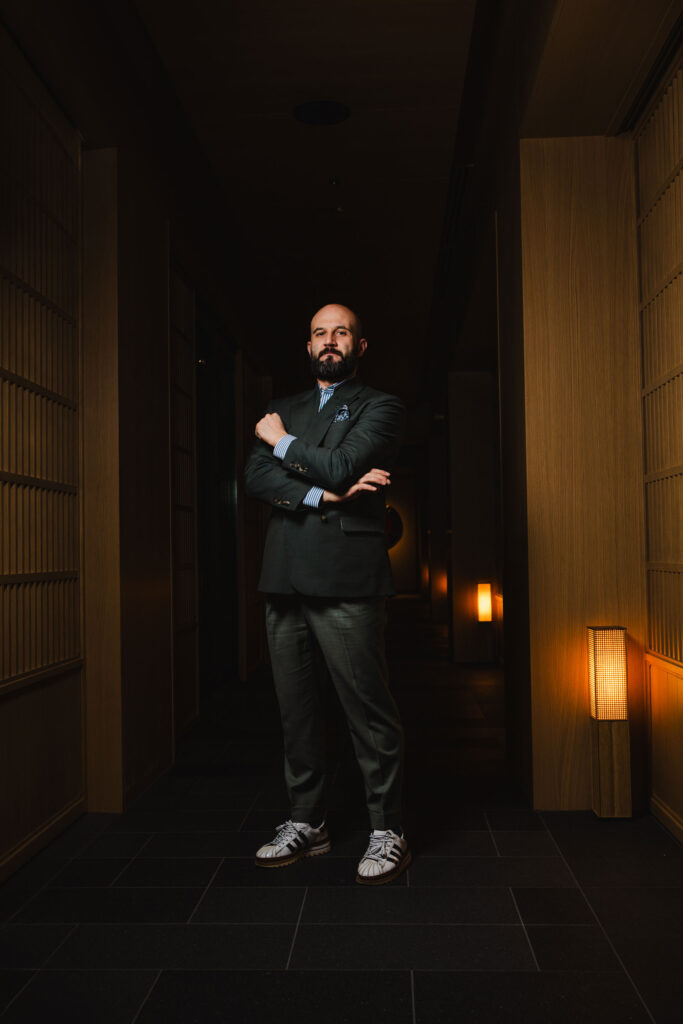
Hospitality thrives on definitions because they make stories easier to tell. People, however, are always more layered than the titles attached to them. “I remember that when I first began working internationally, I was often simply described as ‘the Italian bartender.’ On one hand, that came with positive expectations tied to hospitality, style and attention to detail. At the same time, it felt reductive, as if my identity and creative perspective could be distilled into nothing more than my nationality.”
Born in San Severo, Mario la Pietra moved to London at a young age, a city he describes as the place where his professional life truly began, exposing him to a world he had never known. His time as Head Bartender at the former Bassoon Bar at Corinthia London, then one of the most ambitious cocktail destinations on the scene, became a defining turning point. “It was discipline, discipline, discipline,” he recalls. “A tough, competitive environment, but an incredibly formative one. That was also where another label emerged. People expected me to be impeccably polished and formal at all times, almost as though creativity and luxury could not coexist with personality or spontaneity. That experience made me understand that labels are often projections. They reflect how others see you, not who you actually are. Some may contain an element of truth, but none can fully define a person.”
From Europe to Asia: Mario la Pietra’s Journey
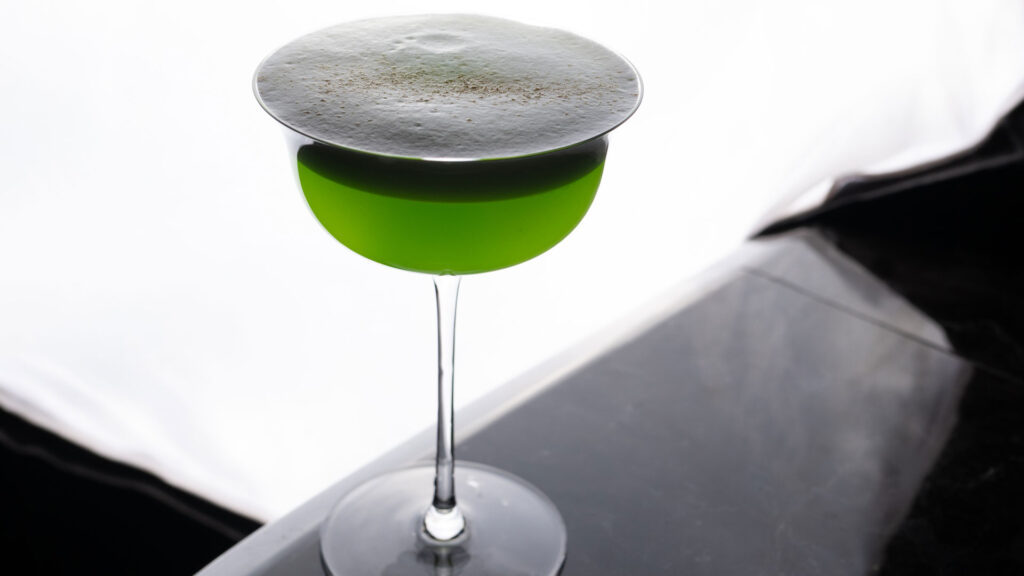
Other chapters, both before and after London, helped shape his professional vocabulary. In Sydney, at Charlie Parker’s, he arrived during a period when international mixology was openly embracing rotovaps, advanced techniques and experimentation. “All the toys, all the extraordinary things we could do, we experimented with all of them there,” he says with a smile. His move to East Asia came through Taipei, where he joined Capella’s task force, an opportunity to understand the group’s standards and internal culture before reaching what would become the real destination: Kyoto. “I was curious about Taiwan, but above all about the Glass House project.”
The Concept Behind Yoi at Capella Kyoto
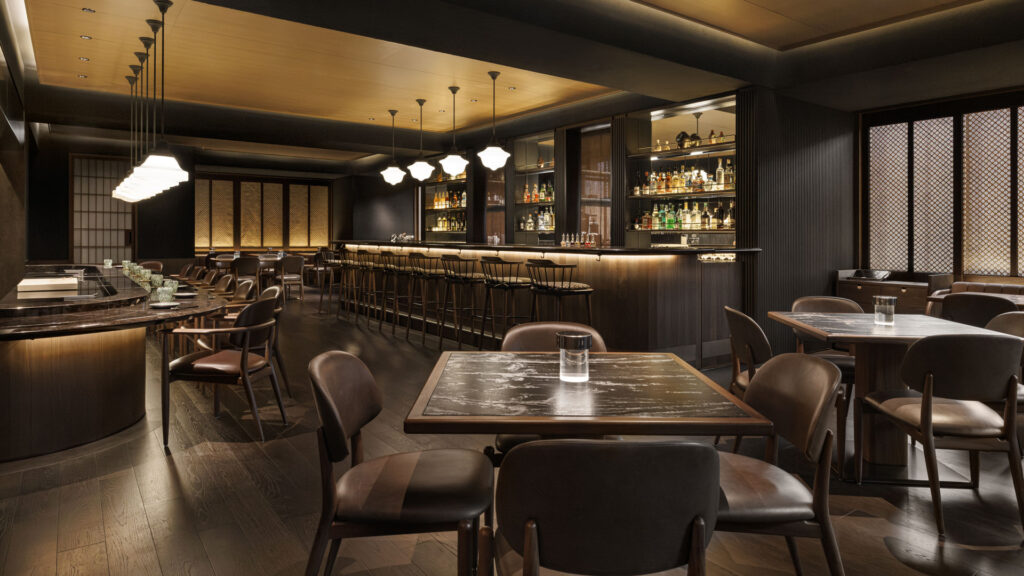
Today, la Pietra oversees the beverage program at the cocktail bar inside Capella Kyoto, a concept built from scratch with a clear intention: to avoid cliché. “I didn’t want Yoi to feel like a library,” he says, recalling one of the earliest conversations around the concept. What emerged is a cocktail bar with an open kitchen, an international team and a deliberate distance from the more predictable narratives often attached to Kyoto.
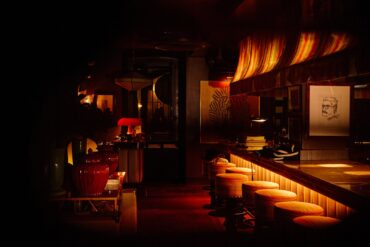
In a city where seasonality is treated almost as a gastronomic doctrine, Mario la Pietra chose to step outside that framework, opting against seasonal menus in a move that runs against the grain and establishes a more independent identity. Instead, the name references the passage between sunset and night, the precise window of time around which the venue has built its personality. The layout revolves around the counter, where kitchen and bar operate in direct conversation. The space itself carries an unusual past: it was once a local elementary school. Original details remain, from pendant lamps salvaged from the former science classroom to flooring from the music room, now woven into the design. The atmosphere blends contemporary aesthetics with traces of memory, set to an Eighties soundtrack that includes Japanese city pop.
Mario la Pietra’s Take on the Negroni
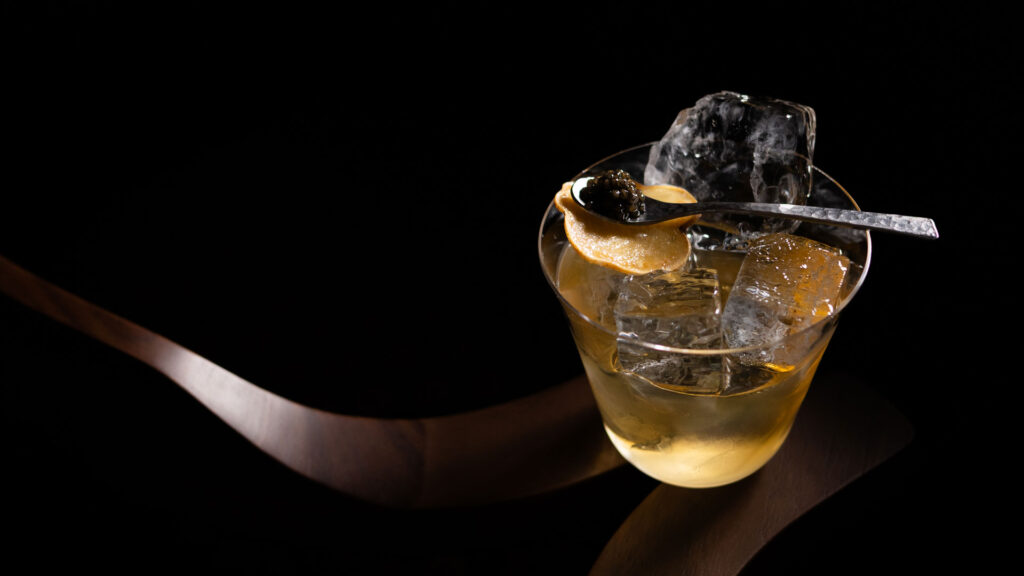
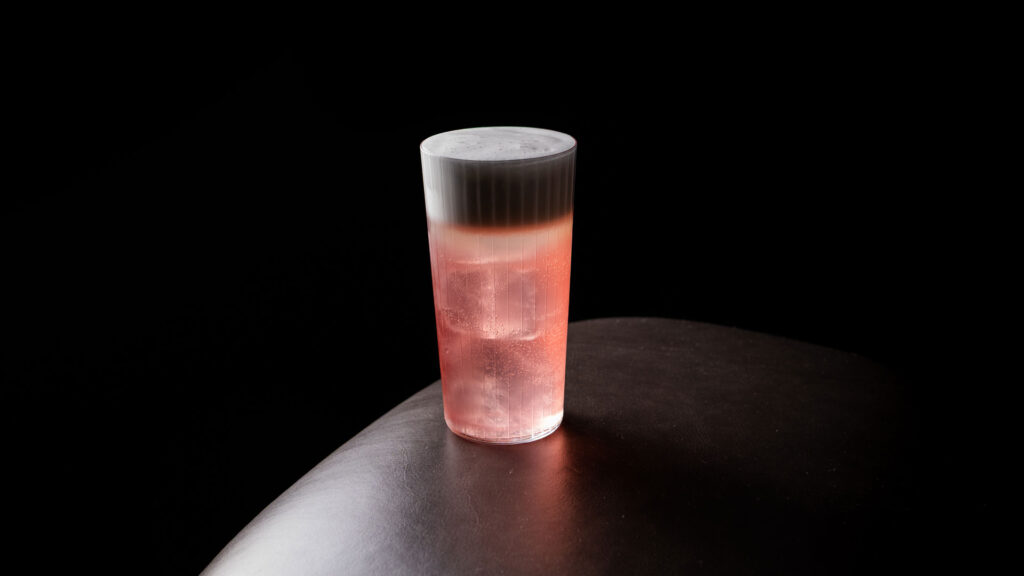
Among the standout cocktails, The Other Rice Negroni twists the Negrosky, a drink la Pietra describes as “a deeply Milanese memory.” The twist also serves as an ironic response to viral social-media mixology trends, including the Sushi Rice Negroni. Here, the familiar Negroni structure takes on a different vocabulary: honkaku shochu replaces gin, joined by sherry, bitter, juniper and an infusion of genmaicha, the toasted green tea with puffed rice, finished with a rice cracker garnish.
Life as an Expat in Japan
If Japanese culture enters the glass in liquid form, life in Japan beyond the bar remains a more complex and fascinating experience. “When you arrive here as an expat, you realise things work differently,” Mario la Pietra says. The language is a genuine barrier, but so too is an everyday administrative culture that seems suspended between extreme technological sophistication and analogue nostalgia. Yet that very friction is what makes Kyoto such a meaningful chapter. Rather than exporting a Western model, La Pietra appears more interested in building a hybrid language of his own. “I believe the most valuable professionals are the ones who continue to evolve beyond a single definition,” he says. “I see labels as reference points, not identities. They are starting points. The moment you become too comfortable inside one, you stop growing.”
The article first appeared on Coqtail – for fine drinkers. Order your copy here
Images credits W Jordan, courtesy Capella Kyoto