
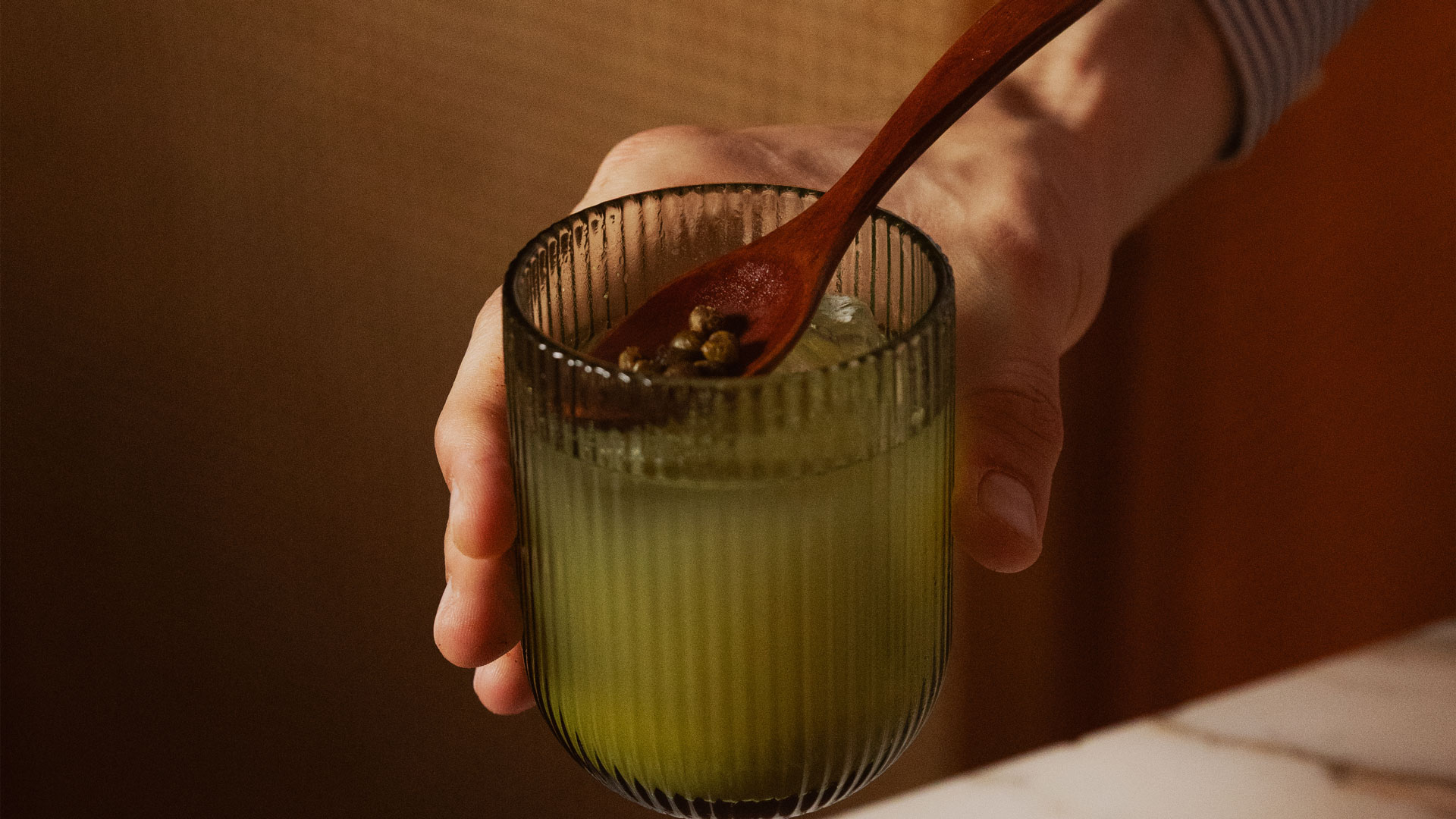
Some cocktails borrow flavors from the kitchen. Others recreate entire dishes. At 1930, the Milan speakeasy that has become one of the world’s leading laboratories for culinary cocktails, you can order a drink inspired by Fettuccine Alfredo. It sounds like a provocation. It isn’t.
Ranked consistently among The World’s 50 Best Bars since 2019, 1930 has built its reputation on treating food as a starting point rather than a theme. Its latest menu continues that philosophy, but with a noticeable shift in direction. Instead of making cocktails more elaborate, bar manager Benjamin Cavagna has been stripping them back. “Our goal,” he says, “is to make these drinks more immediate, elegant and approachable without sacrificing the complexity that defines them.”
That philosophy has also meant accepting that some ideas simply refuse to work. Eggplant parmigiana, despite countless attempts, never made it onto the menu.
A Tasting Menu Served in Cocktail Glasses

The new menu is structured like an Italian meal. Guests begin with antipasti. Burro e Alici captures the familiar combination of buttered bread and anchovies through Cognac, bay leaf and anchovy, while Gazpacho translates the chilled Spanish soup into a refreshing mix of watermelon, tomato and gin.
The pasta course features the menu’s most talked-about cocktail. Fettuccine Alfredo blends Parmesan, butter, black pepper and mezcal into a drink that somehow evokes the iconic Roman-American dish without becoming literal. Alongside it sits Gamberi, where concentrated prawn broth, pea cream and blanco tequila recreate the sweetness and salinity of shellfish.
Main courses continue the exercise. Pizza Marinara combines tomato, oregano, anchovy and vodka, while Sushi pairs salmon, strawberries and sake. Dessert arrives in liquid form, too. Cannolo Siciliano brings together goat’s milk ricotta ice cream, candied fruit, cherries, bitter liqueur and blanco tequila, while Crema al Caffè explores the familiar pairing of coffee and amaro.
Rather than simply naming cocktails after dishes, Cavagna’s team treats each recipe as a study in memory and perception.
Fat Is a Flavor Carrier, Not the Enemy
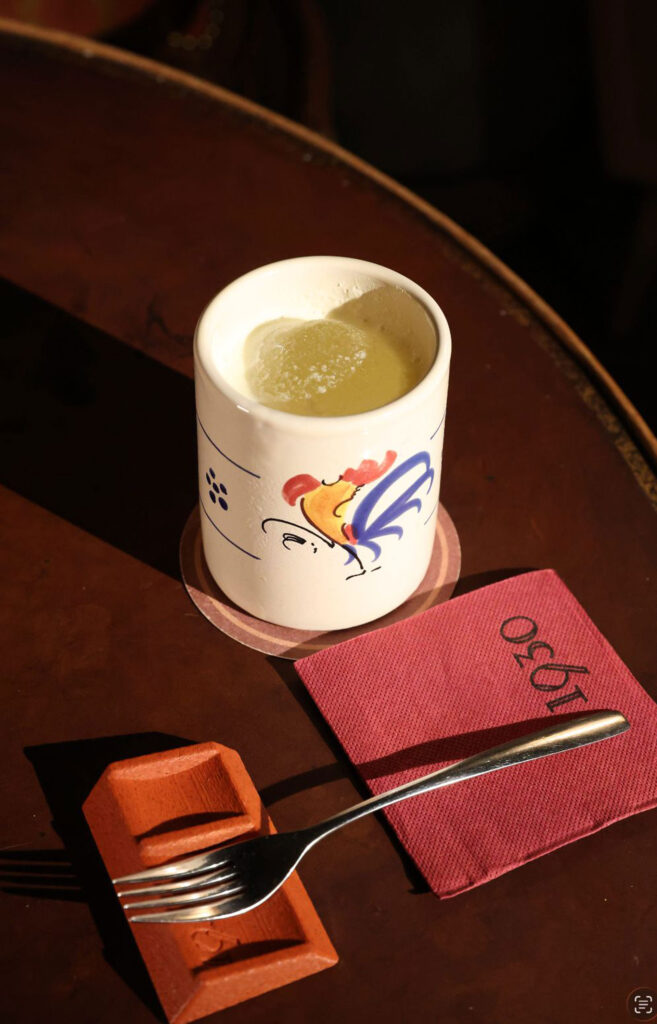
A menu built around dishes rich in butter, cheese or seafood naturally raises a question: are these cocktails actually heavy? According to Cavagna, the assumption misses the point. “A cocktail can be fatty without feeling heavy,” he says. “Those are two completely different things. Fat is one of the best carriers of flavor. It transports aroma, amplifies taste and gives a drink depth.”
That distinction is central to the Fettuccine Alfredo cocktail. The drink is intentionally rich, but never static.
“It isn’t supposed to feel light in the traditional sense,” he explains. “It has to remain dynamic, changing in the glass and keeping the guest engaged until the last sip. Richness is part of the experience—as long as it’s balanced.”
That balance sometimes means resisting technical perfection. “In some cases, we deliberately leave behind a small amount of the fat,” he says. “That slight oiliness makes the cocktail more expressive and much closer to the dish that inspired it.”
Technology Is Just Another Ingredient
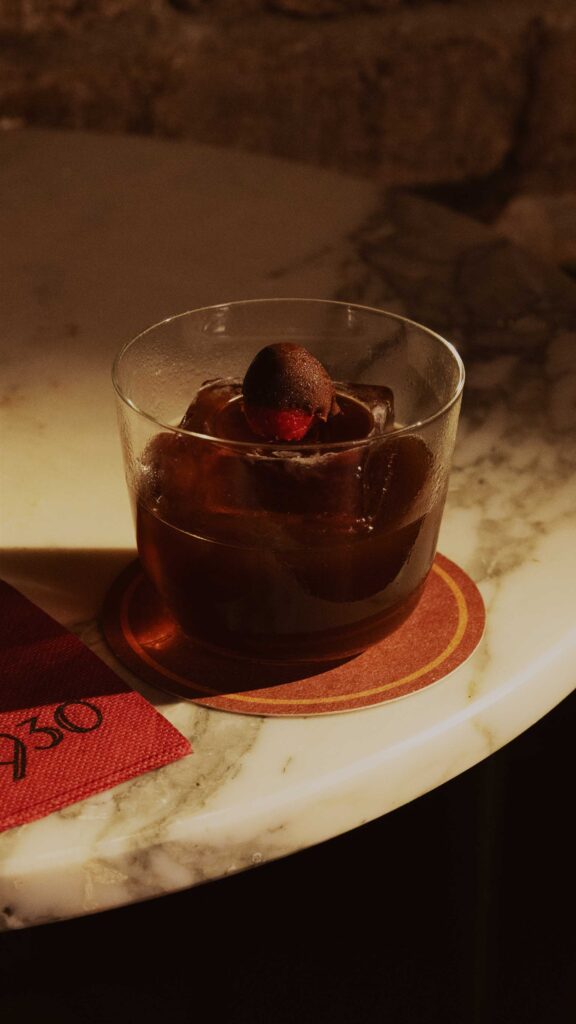
The technical side of the program is substantial, but Cavagna is reluctant to elevate any single technique above another. “There isn’t a best technique,” he says. “There’s only the technique that’s right for the ingredient you’re working with.”
Every aromatic compound behaves differently, meaning extraction methods must be selected accordingly.
Fat-washing remains essential whenever the goal is to capture richness or a silky mouthfeel. Other ingredients respond better to hot infusions, cold macerations or carefully timed extractions designed to preserve more delicate compounds.
For highly volatile aromas, the team relies on rotary evaporation and vacuum distillation. “Those techniques allow us to capture incredibly delicate aromas without exposing them to heat,” Cavagna says. “The level of aromatic precision simply isn’t achievable through more traditional methods.” Technology, however, never dictates the drink. It exists only to serve flavor.
Why Eggplant Parmigiana Refused to Become a Cocktail
Not every Italian classic survives the journey from plate to glass. Eggplant parmigiana proved to be one of the team’s biggest frustrations. “Everyone loves it,” Cavagna says. “But it turned out to be almost impossible to translate into a convincing cocktail.”
The problem lies in the dish itself. Eggplant isn’t its defining flavor. Tomato sauce, basil, cheese, olive oil and the caramelized notes created during baking are equally important. Once those components are separated and extracted individually, the identity of the dish begins to disappear.
“With the same aromatic profile, you could just as easily evoke pasta al pomodoro or a Margherita pizza,” he says. “That’s when we realised that not every dish deserves a liquid version.” Some recipes depend on temperature, texture and the physical interaction between ingredients as much as on flavor itself. “When that’s the case, a cocktail simply isn’t the right medium.”
Building a Liquid Dinner
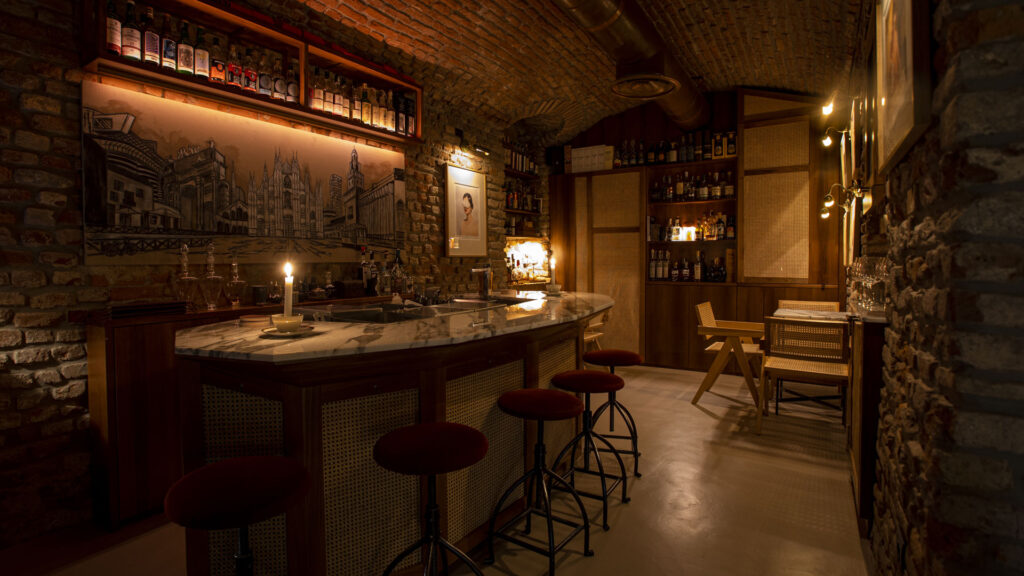
Organising the menu into starters, pasta, mains and desserts naturally encourages guests to order a complete liquid tasting menu. Cavagna doesn’t expect everyone to follow that route. “Our job is to read the table,” he says. “Every progression should be built around the people sitting in front of us.”
A richer cocktail might be followed by something sharper and more restrained. A highly aromatic drink may be balanced with one that’s drier and more linear, allowing the palate to reset before moving on. Throughout the menu, one principle never changes. “A cocktail should always be a great drink first. Surprise can never come at the expense of flavour or balance.”
It’s an approach that explains why 1930 has become one of the industry’s most influential bars. The cocktails may reference pasta, pizza or cannoli, but the objective isn’t to imitate dinner. It’s to rethink how culinary memory can exist in a glass—and to do so with the same precision, restraint and sense of pleasure that define any memorable meal.
Photo courtesy of 1930