
The Espresso Martini is one of those cocktails that continues to fascinate the bar world. It remains extremely popular — Drinks International recently ranked it fourth in its latest global list — and at first glance it appears simple to execute. In reality, its success depends on a series of technical details that often go unnoticed.
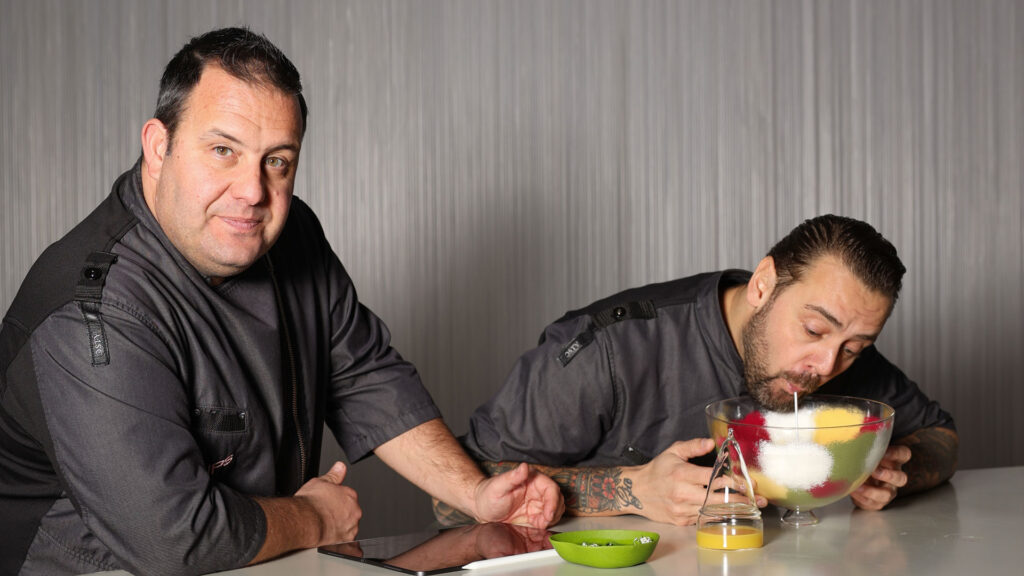
At Sips in Barcelona, which he runs together with partner Marc Álvarez, Simone Caporale starts from the original recipe to explain what truly determines the drink’s balance and which technical choices make it possible to achieve a precise result—especially when developing a variation such as the Cubanito, now featured on the bar’s menu.
The Structure of the Espresso Martini

The drink is widely loved, but that does not mean it is easy to execute properly. For Caporale, the starting point is always the original structure of the cocktail. “If you follow the classic recipe created by the legendary Dick Bradsell, the DNA of the Espresso Martini is already there and the proportions are clearly defined: two parts, one part, one part.”
Understanding that structure is essential. “The Espresso Martini is built on a simple but very precise balance: vodka provides the alcoholic backbone of the drink, the coffee liqueur brings sweetness and roundness, and the espresso defines the aromatic profile of the cocktail.” Starting from these proportions allows bartenders to understand how the ingredients interact and what role each element plays in the overall balance of the drink.
Only once that logic is clear does it make sense to start adjusting the recipe — whether by changing the coffee, the vodka or other components.
Managing Alcohol Content

In the classic Espresso Martini recipe, controlling the alcohol level is an important step because it directly affects the texture of the foam. “The key is always the overall balance of the mixture. When the alcoholic component becomes too dominant, the foam forms with more difficulty or tends to be less stable.”
During the shake, the movement incorporates air into the liquid. That air is then trapped by the natural oils present in the coffee, creating the crema that defines the cocktail. “For this process to work properly, the structure of the drink needs to remain balanced. That way the oils can hold the microbubbles generated during shaking and produce a denser, more even foam in the glass.”
Choosing the Right Shaker
Once the balance of the recipe has been defined, technique becomes crucial. “The best shaker for an Espresso Martini is a two-piece Boston shaker,” Caporale explains. The reason lies in the mechanics of the shake. “The internal volume of that type of shaker allows the ice and the liquid to move more freely, which helps incorporate air into the drink.” That movement is precisely what allows the oils in the coffee to capture the air and generate the foam. “More space for movement means more effective aeration and a more stable texture in the final drink. It’s the same principle used when whipping cream.”
Ice and Shaking Time
Would reducing the amount of ice in the shaker help the foam develop more easily? “No. The less ice you use, the faster it melts,” Caporale explains. The reason has to do with the transfer of heat between the liquid and the ice. If there is not enough ice to keep the temperature low, it melts quickly and dilutes the drink.
“It’s a question of the thermal entropy of ice,” he adds. “But it’s not really about how many cubes you add. It’s about how long you shake, depending on how much ice is in the shaker.” Using too little ice would mean shaking the cocktail far longer to reach the same level of chill. “If you add very little ice you would need to shake five or six times longer, and that simply makes no sense.”
Cubanito, Sips’ Twist on the Espresso Martini
Once the structure of the classic cocktail is fully understood, it becomes possible to adapt the recipe and develop a variation that still respects the logic of the original. That approach led Caporale to create the Cubanito, a cocktail now served at Sips.
“In this case there is no espresso and no vodka,” he explains. “The starting point remains the idea of a drink built around coffee, but the structure is completely rethought.” Classical cocktail theory suggests that the main ingredient of a drink should be the spirit. In the Cubanito, however, cold brew becomes the dominant element. The choice of spirits also reshapes the drink’s profile.
“In the classic Espresso Martini, vodka mainly contributes alcohol and remains quite neutral,” Caporale continues. “In the Cubanito we use Japanese whisky and cream sherry instead. The whisky adds structure and depth from wood ageing, while the sherry introduces oxidative and vanilla notes that create a more complex dialogue with the coffee.”
The Role of Crème de Cassis
A small amount of crème de cassis completes the structure of the cocktail. “In very small doses, this blackcurrant liqueur introduces a subtle fruity acidity that you can also find in many modern coffees,” Caporale explains. Its presence does not change the sweetness of the drink but highlights certain secondary aromatic notes, helping give the Cubanito a much more layered profile.
Preparation and Service of the Cubanito
The Cubanito is prepared using a technique that differs from the classic Espresso Martini. The blend of ingredients is pre-bottled without dilution and stored in a cold water bath at –2 to –3 °C. “The dilution already comes from the cold brew,” Caporale explains, “so the cocktail is not shaken with ice.”
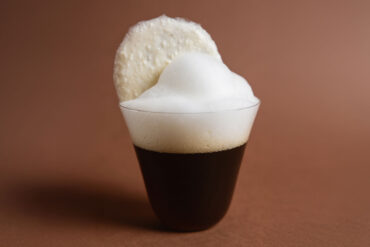
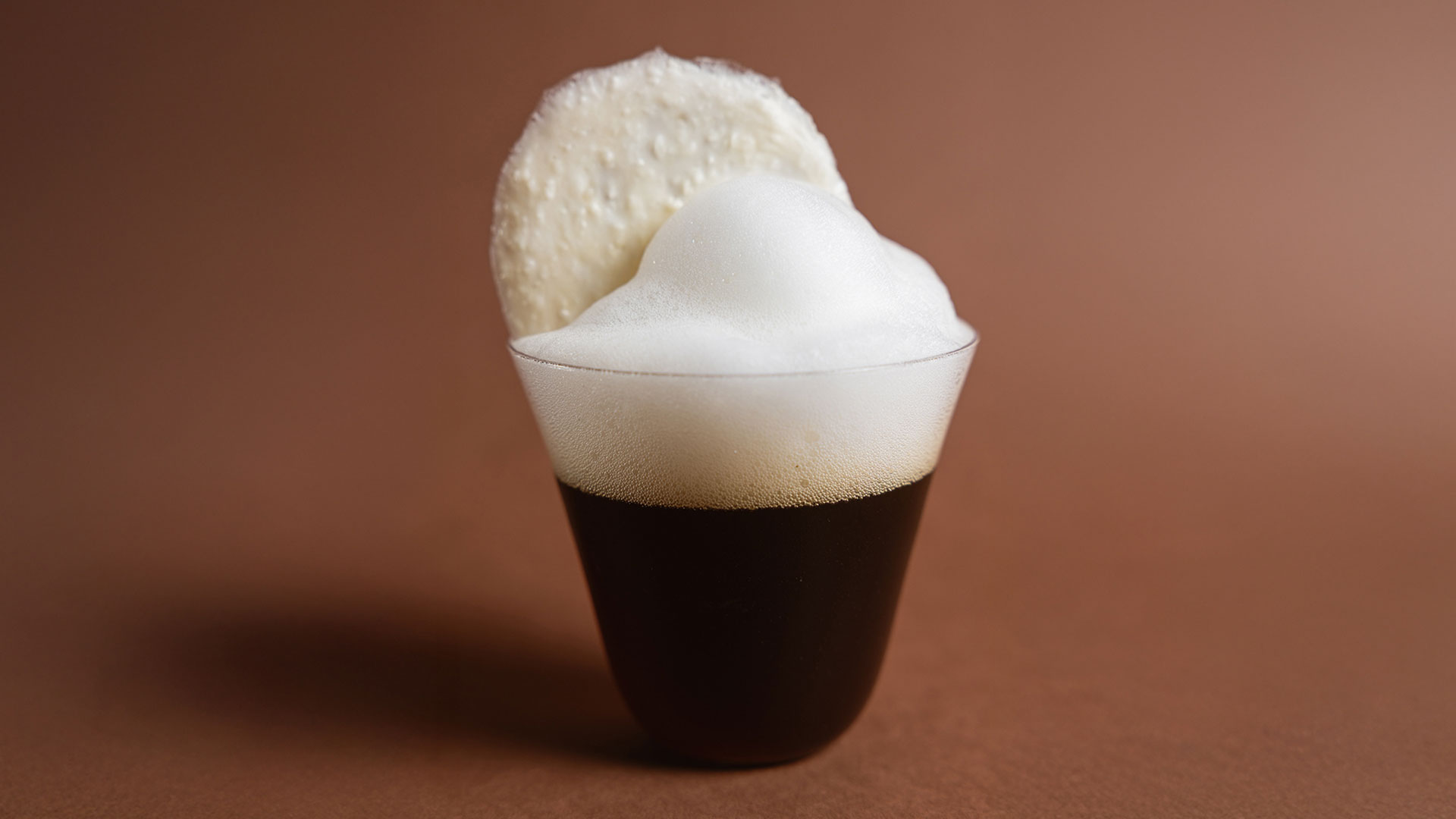
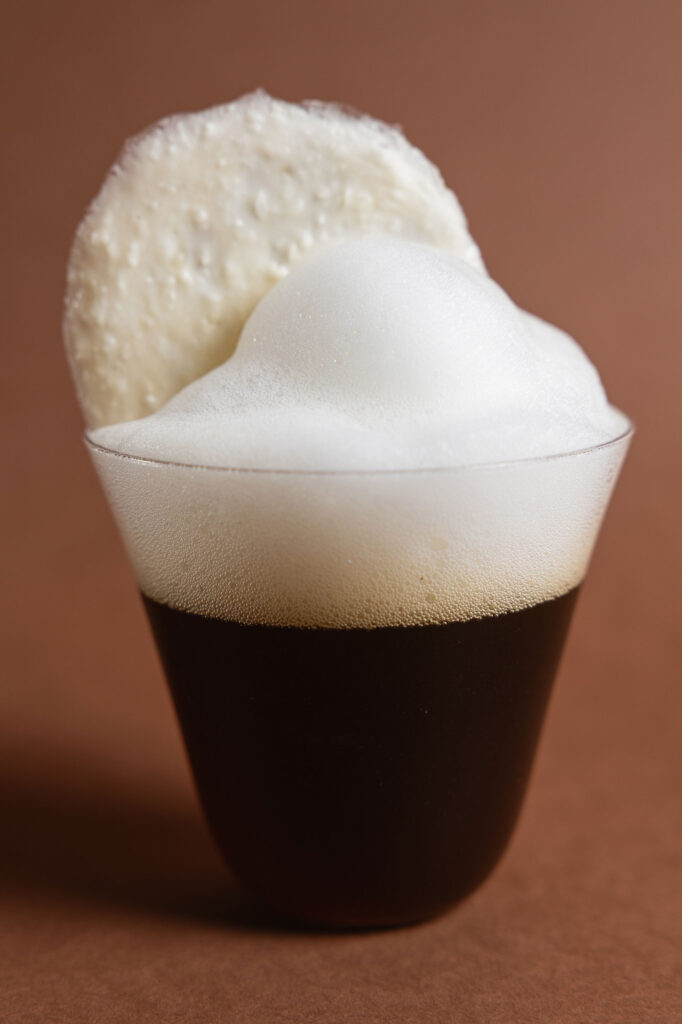
To finish the drink, Sips adds a white pineapple foam, obtained by whipping pineapple juice with sucroester in a stand mixer. The foam replaces the traditional crema of the Espresso Martini but offers a lighter and more aromatic texture. Below is Simone Caporale’s recipe.
Cubanito Cocktail, a Twist on the Espresso Martini
Ingredients
• 30 ml cold brew
• 2.5 ml crème de cassis
• 20 ml cream sherry
• 10 ml Japanese whisky
• 2.5 ml 1:1 sugar syrup
Method
Combine the cold brew with the crème de cassis, Japanese whisky, cream sherry and a small amount of sugar syrup. Bottle the blend and keep it in a cold water bath at about –2 °C / –3 °C so it can be served directly into the glass. Prepare the pineapple air by whipping one liter of pineapple juice with 3.5 g of sucroester in a stand mixer.
Garnish
Prepare a small coconut biscuit using coconut fiber and coconut milk, ingredients naturally rich in fats. Add starch capable of absorbing and retaining the fat molecules present in the coconut. During dehydration this starch allows the biscuit to maintain its structure and develop a crisp texture.
The principle is the same used in the production of crackers: despite being rich in oils, they remain crunchy thanks to starches that absorb and retain fats during baking or drying.