
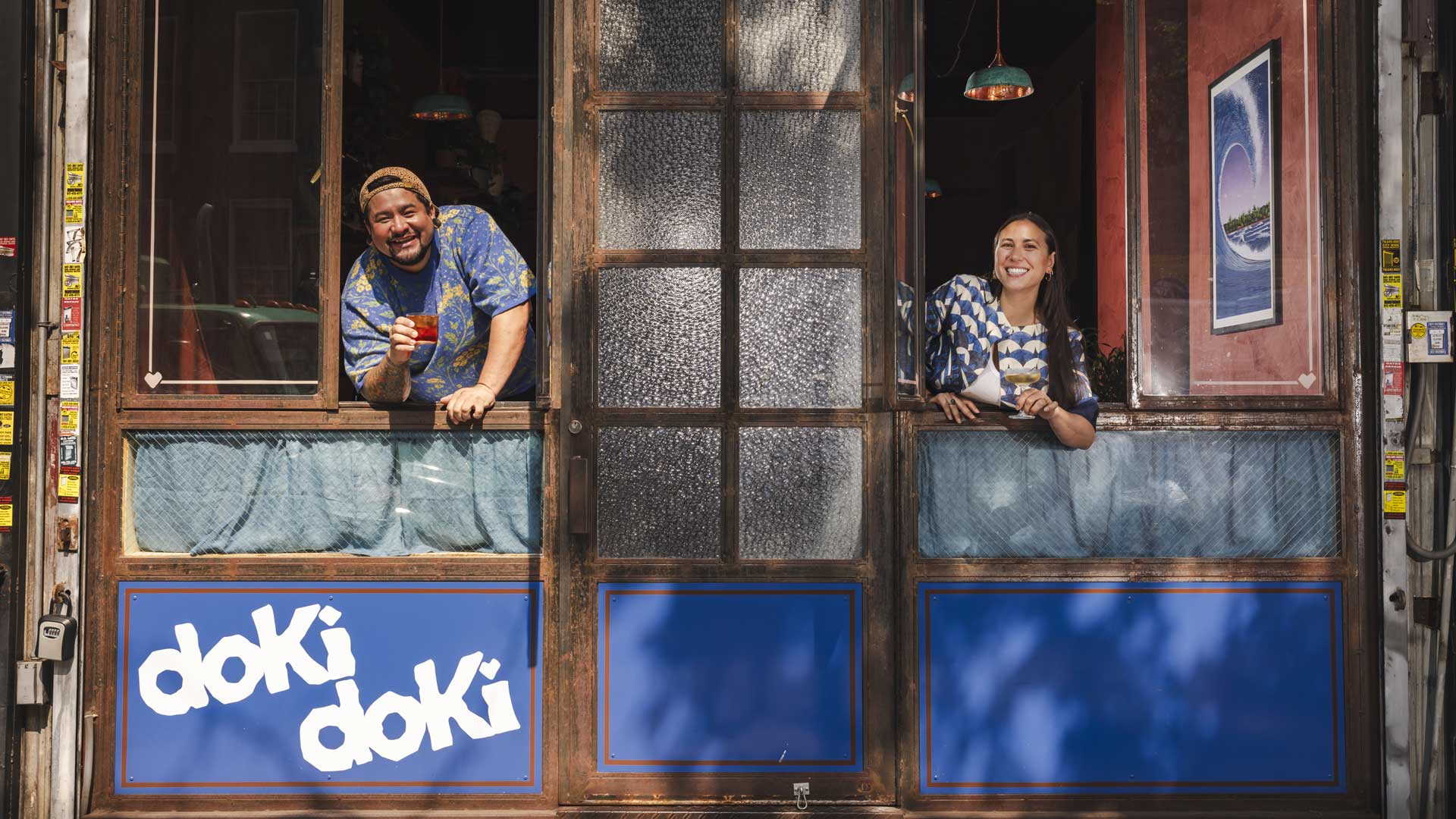
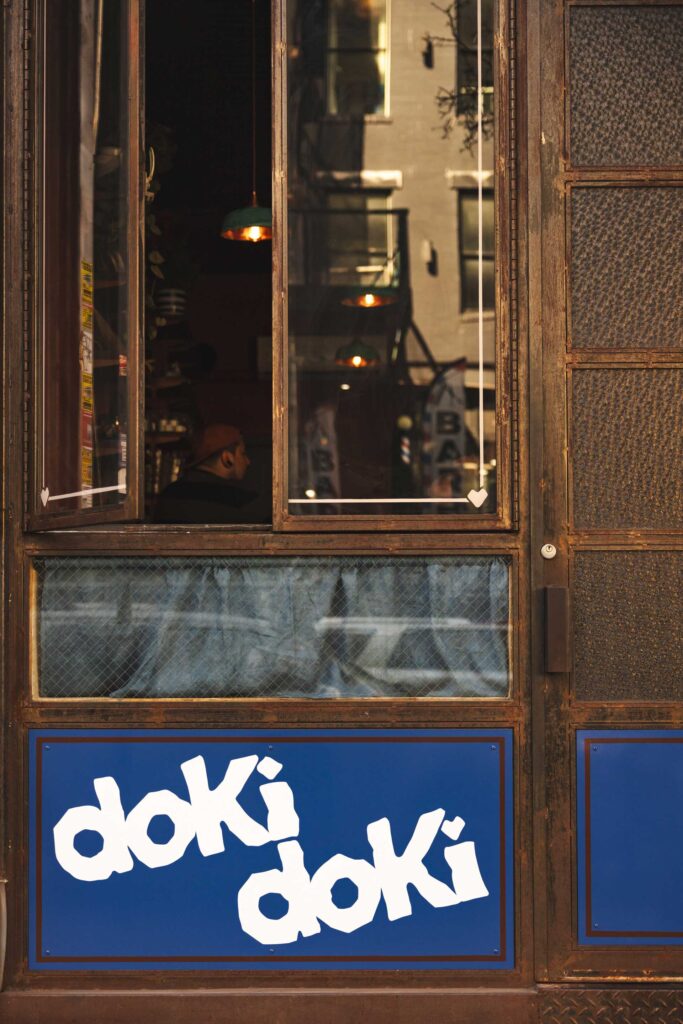
A-K Hada and Christian Suzuki-Orellana (Suzu) have joined forces to open Dokidoki, a Brooklyn cocktail bar built around a conversation between Japanese and Latin American cultures. The drinks lean heavily into Japanese ingredients and techniques, with the occasional tropical accent, and favor low- and no-alcohol serves, while the soundtrack brings Latin rhythm and warmth. The idea is for guests to leave energized, in a better mood and having had some very good drinks along the way.
Dokidoki, the Sound of a Racing Heart
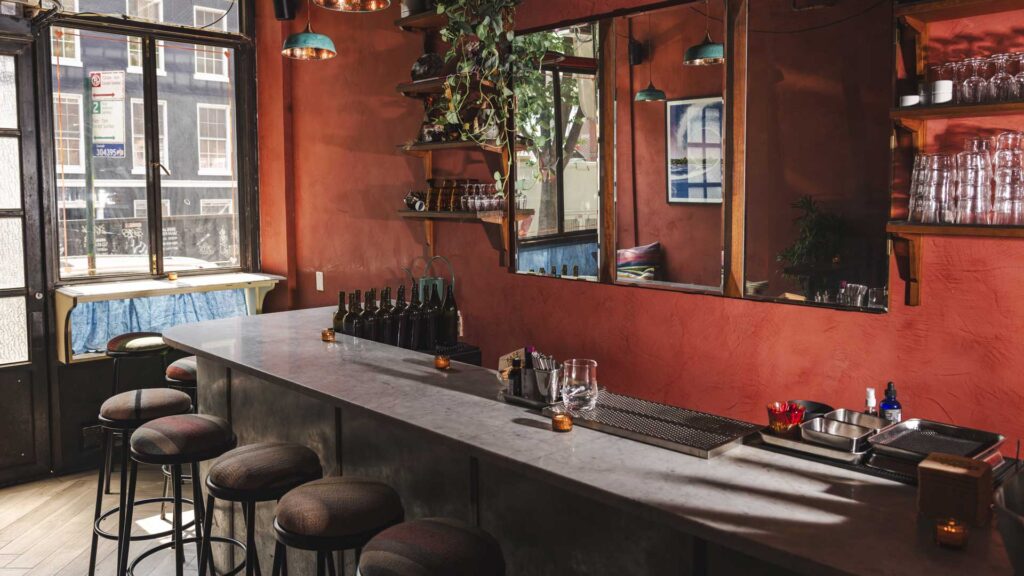
The word dokidoki is Japanese onomatopoeia for the sound of a heart beating fast. It can describe falling in love, the nerves that come with facing a challenge or the rush of encountering something unexpected. At Hada and Suzu’s bar, the name refers both to the energy of the Latin music filling the room and to the warmth of Japanese hospitality.
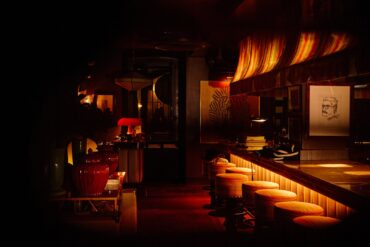
The design takes another cue from Japan: the tachinomi, traditional standing bars built around casual drinking and spontaneous interaction. Dokidoki does have stools and seating, but preserves that same informal spirit, creating a space designed to encourage encounters and conversation.
Signature Drinks With Japanese and Latin Accents
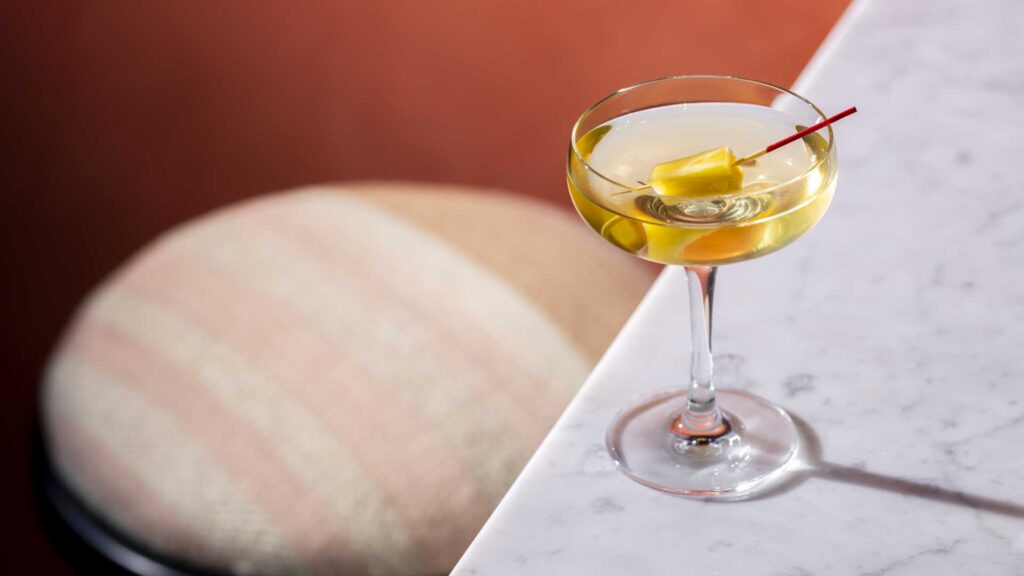
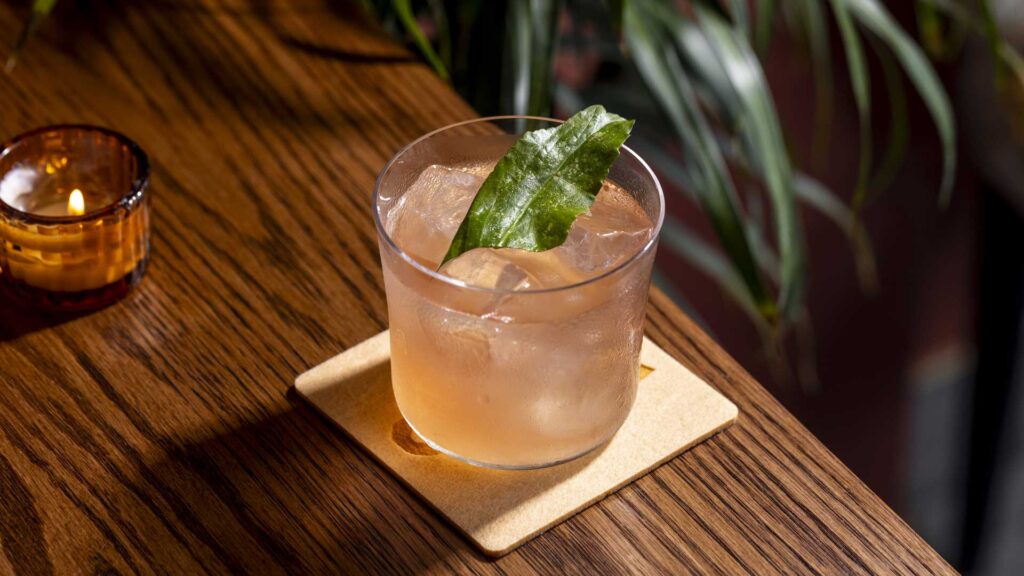
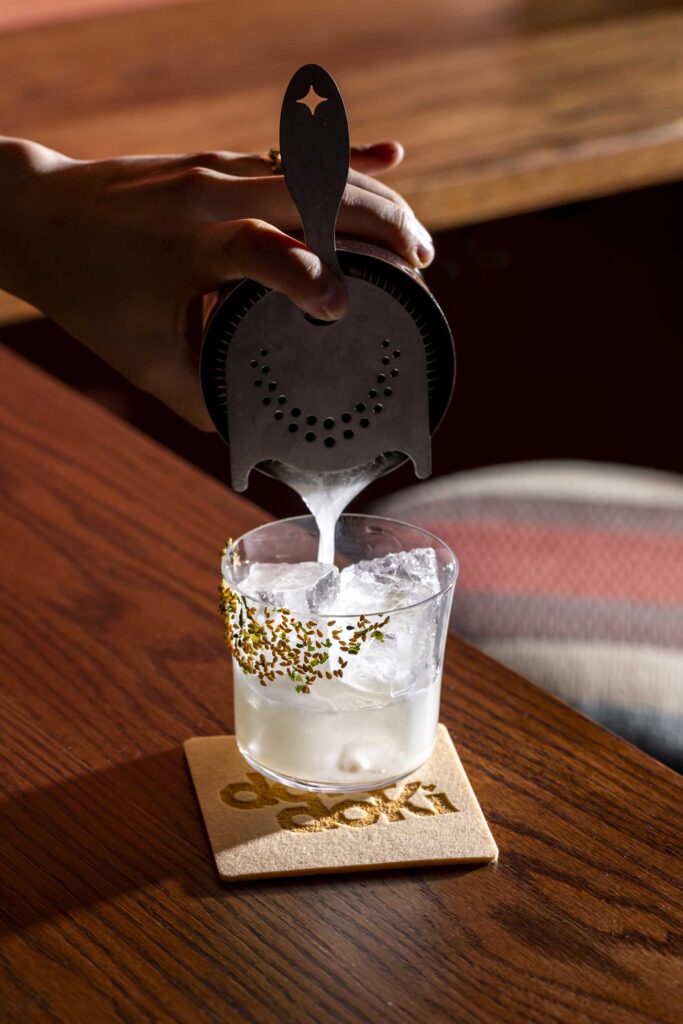
That conviviality extends to the cocktail list, which keeps alcohol levels relatively low while playing with less conventional combinations. Take the Tropi Hai: barley shochu and roasted barley tea provide a backbone of grain and nutty flavors, while grapefruit and tamarind bring freshness. The latter also adds body and bridges the drink’s acidity with the softer spice of cinnamon.
Roasted notes return in the Shibuya Cafecito, made with two different barley shochus: one more floral and fruit-driven, the other deeper and more intensely toasted. Coffee and relajo tea build on that foundation, the former contributing depth and bitterness, the latter woody and balsamic notes. Vanilla and whey soften the edges and give the drink a velvety texture.
The Ichiki Tini is more layered still. Its base is sweet potato shochu, with pronounced lychee and tropical-fruit notes, balanced by the mineral character of white vermouth. Pineapple brings sweetness, while verbena adds an aromatic, herbal lift.
For those looking for an alcohol-free option, there is the Rosie Perez, a fresh, lightly smoky, umami-driven cocktail. Dealcoholized sparkling wine provides crisp acidity, mango brings tropical sweetness, genmaicha contributes savory and gently bitter notes, and shishito pepper finishes with a fresh vegetal edge.
A Menu That Speaks Two Culinary Languages
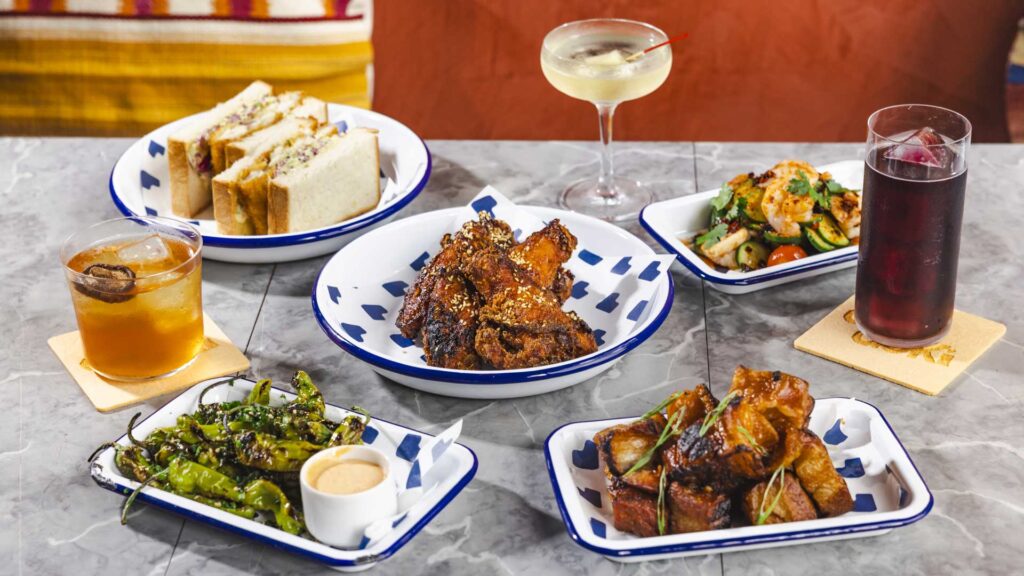
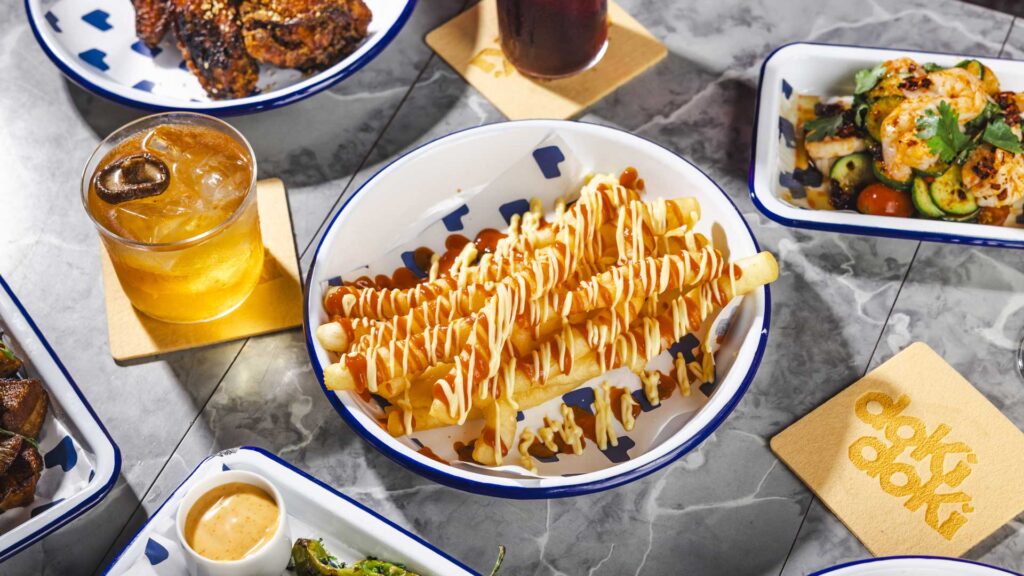
If the drinks bring Japan and Latin America together, the food follows much the same route. Consulting chef Daniel Maysonet starts with dishes commonly found in izakayas, then layers in the bolder flavors of Puerto Rican and Salvadoran cooking.
There is crispy pork belly with yuzu kosho and tamarind, for instance, and cod with cabbage, sesame tartar sauce and shokupan. Nikkei influences surface here and there, but the kitchen uses them as a point of departure rather than a formula, resulting in a menu with an identity and momentum of its own.
Photos courtesy of Dokidoki, credits Shannon Sturgis