
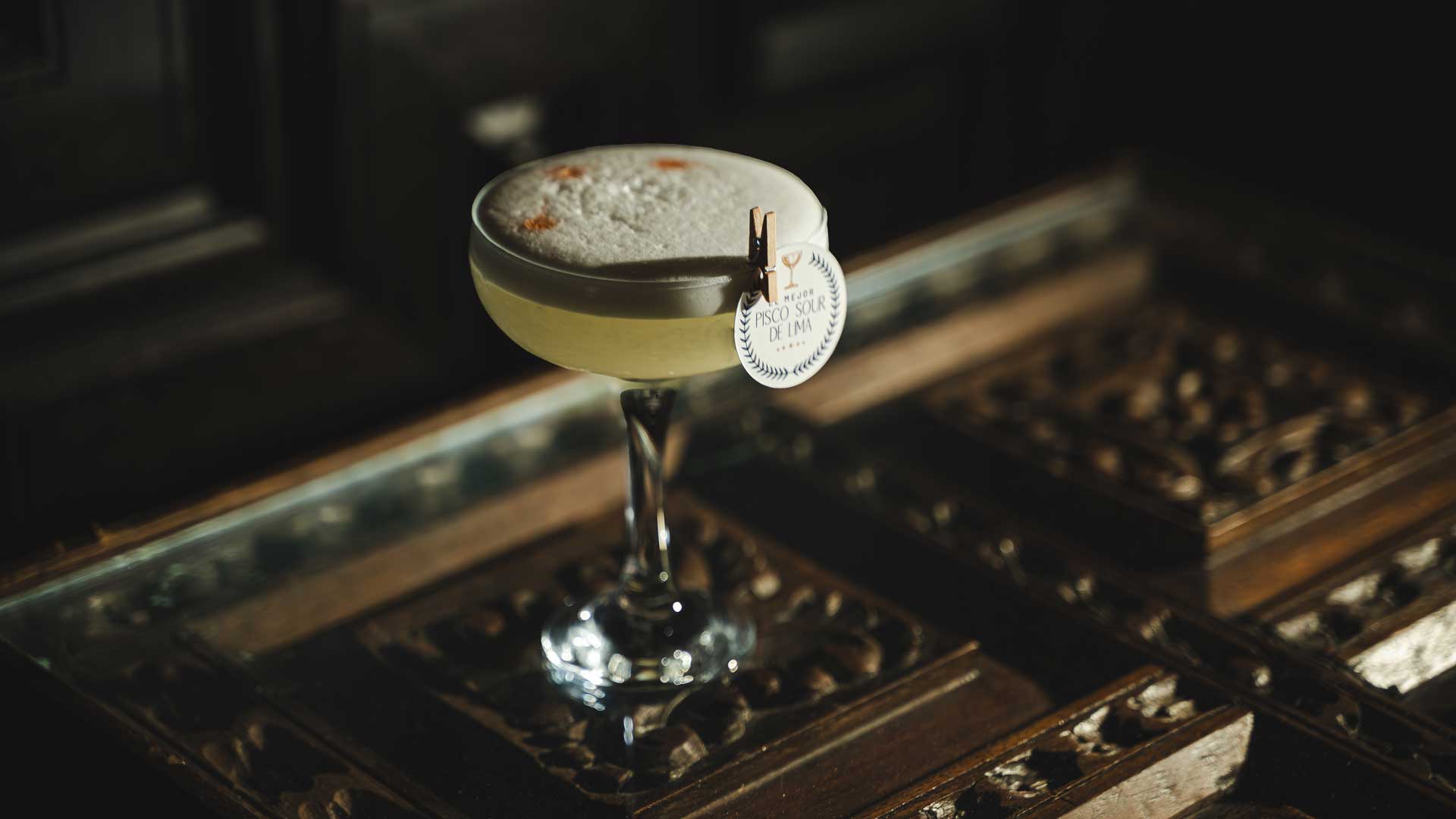
The Pisco Sour is a South American cocktail made with pisco, lemon juice, sugar, and egg white. Its invention has long been disputed by Peru and Chile, yet according to the International Bartenders Association the original version is Peruvian.
The Origin of the Pisco Sour: Peru or Chile?
The debate around the origins of pisco has set Chile and Peru at odds like neighbors in a never-ending building meeting, and the same holds true for the Pisco Sour. It hardly matters that most sources credit its creation to an American immigrant in Peru: the argument remains fierce to this day. So much so that two distinct recipes coexist, depending on the country in question.
The IBA Original Recipe
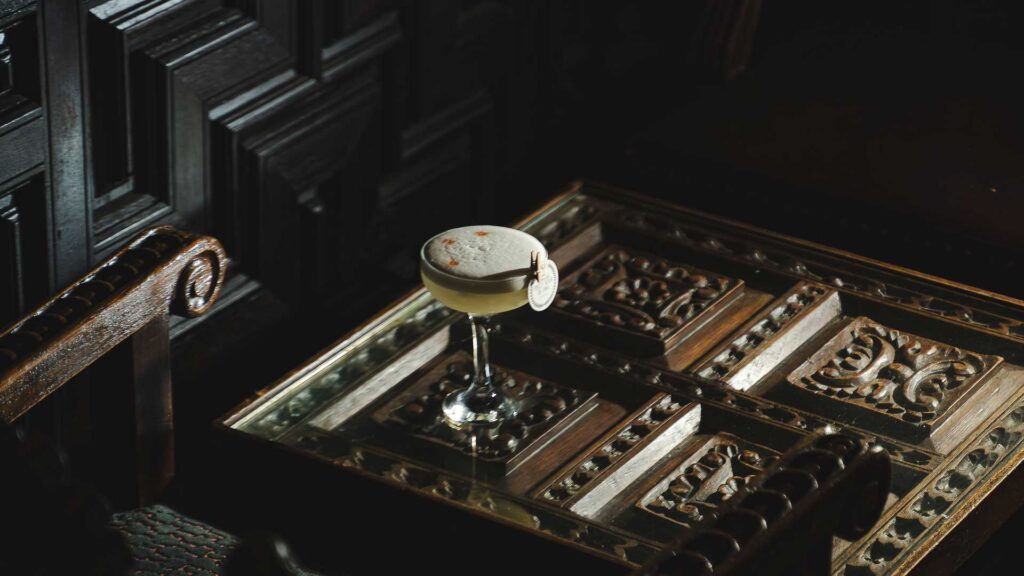
There are several versions of the Pisco Sour, but the IBA has certified the one made in Peru. It is worth noting that bitters are not included among the core ingredients, as they are used solely as an aromatic garnish and do not play a role in the cocktail structural balance. Here is the IBA recipe for the Pisco Sour.
Ingredients
- 60 ml pisco
- 30 ml fresh lemon juice
- 20 ml simple syrup
- 1 egg white
Method
Add all ingredients and cubed ice to a shaker. Shake vigorously, then strain into a stemmed glass or an old fashioned glass. A blender may be used as an alternative to a shaker.
Garnish
Two or three drops of Peruvian Amargo Chuncho bitters on the foam created by the egg white. If unavailable, Angostura bitters may be used.
Peruvian vs Chilean Pisco Sour: the Differences
None of this has stopped Chile from claiming primacy over the drink. As a result, two versions exist today. The Peruvian version calls for Peruvian pisco, lemon juice, simple syrup, egg white, and bitters; the Chilean version omits both the egg white and the bitters and, naturally, uses Chilean pisco.
The History of this cocktail
The most widely told story centers on Victor Vaughen Morris, born in Salt Lake City, Utah, on August 5, 1873, into a respected Mormon family. In 1903 (or 1904, depending on the records), Morris moved to Cerro de Pasco, a mining town in the Peruvian Andes, where construction was under way on what was then the highest railway in the world.
Work progressed quickly, and in July 1904 celebrations were held to mark the end of construction. Around five thousand people attended, and Morris was tasked with overseeing the festivities. Among other things, he decided to entertain the crowd with a steady flow of Whiskey Sours. Toast followed toast, and the whiskey ran out in no time. Looking for an alternative, Morris turned to pisco.
Fast forward to April 1, 1916, when the Morris Bar opened in Lima. Victor stood behind the counter, turning the venue into a gathering place for the Peruvian upper class and foreign residents in the capital. He soon became known by the nickname “Gringo” and for having invented the Pisco Sour.
Who Perfected the Pisco Sour: the Role of Mario Alfonso Bruiget Burgos
Historians believe that the cocktail served at the Morris Bar was not yet the one known today: it likely lacked both egg white and bitters. To arrive at the definitive recipe, a few more years were needed, along with the contribution of the Peruvian bartender Mario Alfonso Bruiget Burgos.
What happened is quickly told. The enormous success of the Morris Bar prompted other venues to imitate its style and menu, offering generous compensation to Gringo Morris’s bartenders to switch allegiances. Many accepted, carrying the Pisco Sour recipe with them and introducing small variations.
Victor Morris’s commercial fortunes suffered, as did his health. In 1929 the Morris Bar closed in bankruptcy, and a few months later its founder died. At that point the baton passed to former collaborators, foremost among them Mario Alfonso Bruiget Burgos, then on staff at Hotel Maury. According to many sources, it was he who perfected the Pisco Sour recipe by adding egg white and Amargo Chuncho, helping propel the drink to international success.