
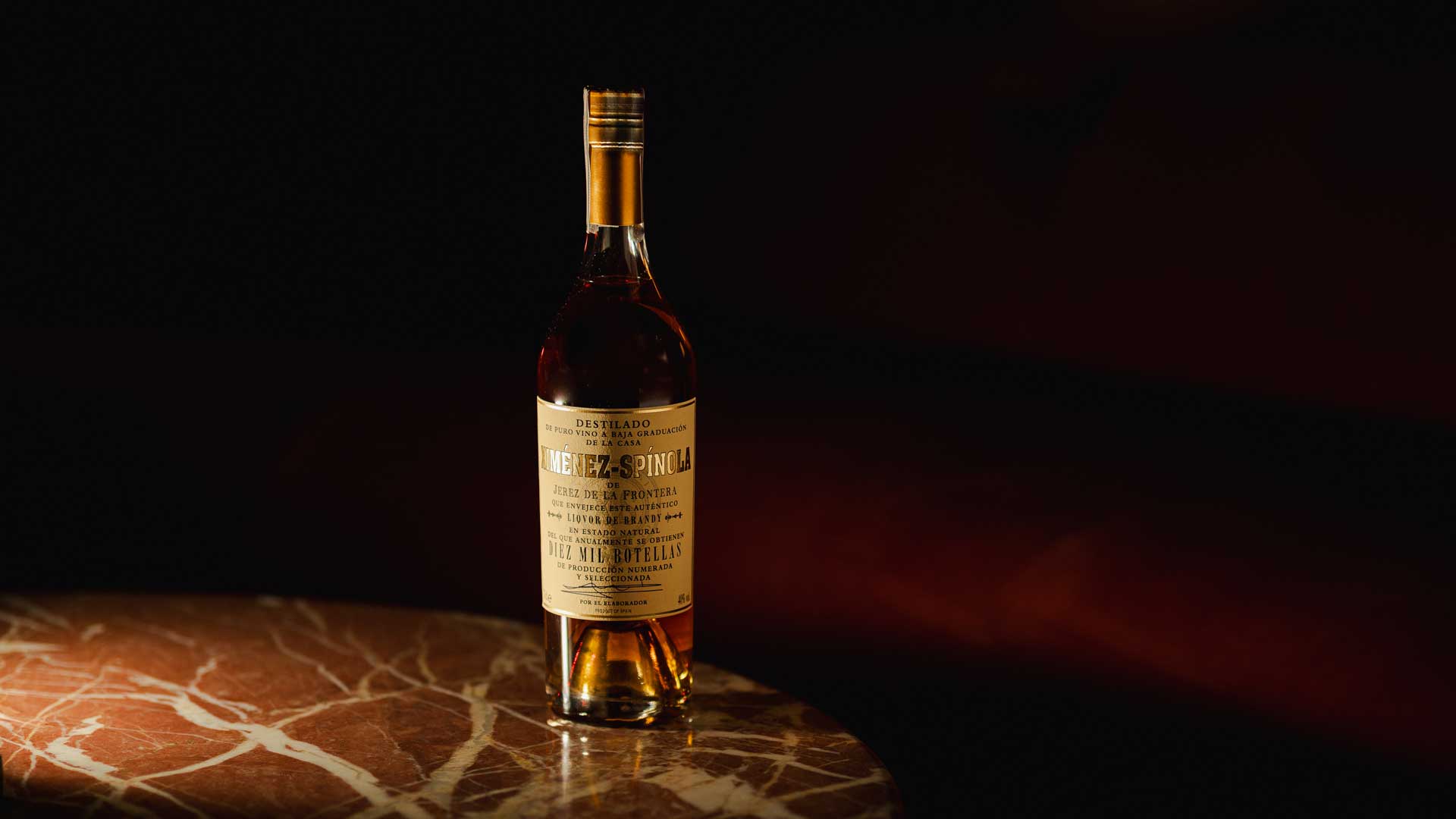
In Jerez de la Frontera, everything starts with albariza, a white, porous soil that absorbs water and holds it deep underground. This soil helps the vines withstand the Andalusian heat, driving their roots dozens of meters into the ground. Within this balance lies the production philosophy behind Ximénez-Spínola’s Brandy Criaderas Diez Mil Botellas.
“By saying no to conformity, the family avoided more affordable grapes like Arién and Palomino Fino. For nearly 300 years, they have worked exclusively with Pedro Ximénez, a prized variety with extremely low yields, especially when distilled,” explains Davide Monorchio, Spirits Manager at Pellegrini Spa.
Chestnut Wood and the Solera Method in Brandy Production
Wood completes the picture. “The barrels are 750-liter chestnut casks from a criadera started in 1948. Spanish chestnut nearly disappeared after the civil war; only a handful of trees remain. That makes these casks even rarer.” The wood first holds sweet Sherry, then the distillate. “The brandy absorbs what the cask has retained, becoming softer and more aromatic. A step that reshapes the spirit’s character, giving it roundness and a velvety profile.”
The Solera system does the rest. Periodic transfers blend different vintages and guarantee sensory continuity, where age statements disappear and an organoleptic thread remains constant. Ximénez-Spínola’s Brandy Criaderas Diez Mil Botellas is the clearest expression of this approach. Another defining trait is production volume: the estate bottles 10,000 units a year, a figure that does not increase because expanding the Solera would require additional chestnut casks — an almost extinct resource.
Sensory Profile of Brandy Ximénez-Spínola and Pairings
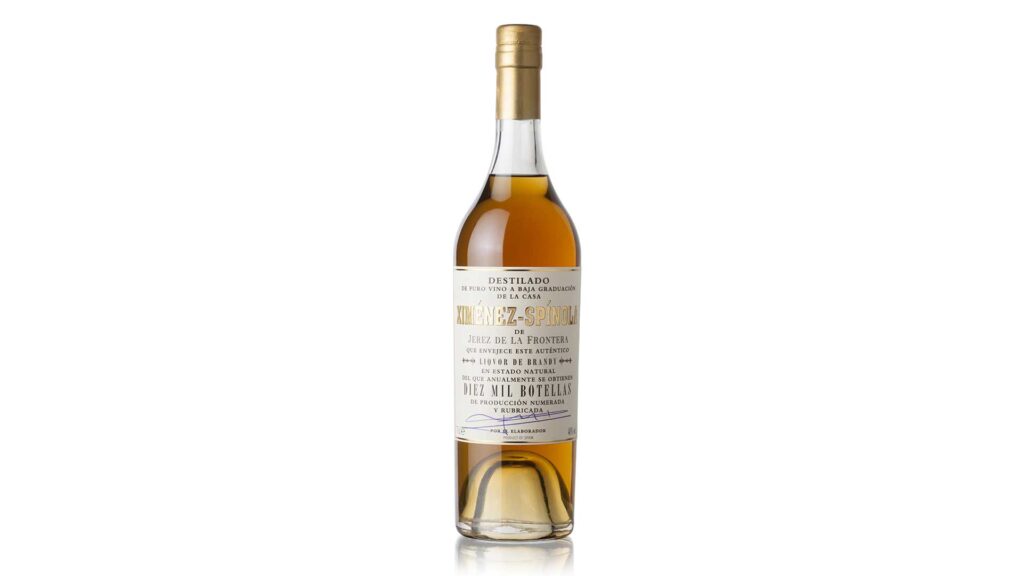
The profile in the glass is firm and precise. “A bright, luminous amber color. On the nose, raisin and plum, followed by a spectrum of aromas reminiscent of an autumn forest floor. Chestnut brings damp, earthy notes that evoke wooded paths and ripe fruit. Oxidation adds a broad, persistent fragrance that never feels heavy. On the palate it stays clean and linear, with a softness that’s striking in both intensity and finesse.”
The sip moves at an easy pace. “Pleasantly smooth,” Monorchio notes. The brandy comes into its own after dinner, especially with blue cheeses, foie gras with caramelized figs or a soft, aromatic cigar. In many cases it takes the place of a meditation wine, thanks to its enveloping structure. “What seduces,” he adds, “is the way this spirit wins over the palate, in the best Spanish tradition.”
The article first appeared on Coqtail – for fine drinkers. Order your copy here
Photo by Emanuel Florentin x Coqtail, all rights reserved
In partnership with Pellegrini s.p.a.