
Over the past few years the Espresso Martini cocktail has returned forcefully to the global bar scene. The cocktail owes its birth to a woman with very clear ideas, a bartender at the height of his powers and a fatigue that needed defeating. Its name tells one truth — the presence of espresso — and one lie: it is not a Martini.
The Story of the Espresso Martini cocktail, Between Models and Bartenders
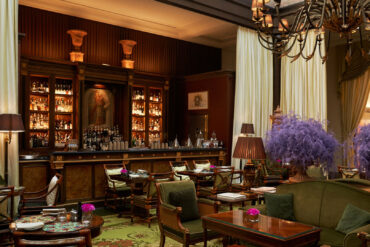
The story of the Espresso Martini is relatively recent, which means many details are known, though not all. The year is 1983, in London, inside the Soho Brasserie. Behind the bar stands Dick Bradsell, at the peak of his reputation and creativity. He is leading the London cocktail renaissance and everyone wants to watch him at work: ordinary customers, celebrities, even royalty.
One day a model walks into the Soho Brasserie. She is strikingly beautiful, with an intense gaze, and she has clearly had too little sleep. She approaches the bar, catches Bradsell’s attention and asks for “something to wake me up, then fuck me up.” The request is less provocative than it might sound at first: it essentially means she wants a drink that will wake her up and give her a proper jolt.
A Cocktail Built Around Espresso
Bradsell later recalled that “the coffee machine sat right next to my station. It was a nightmare, because coffee grounds were everywhere. It’s easy to see how coffee was constantly on my mind, and at that time the alcoholic base of every drink was vodka—everyone wanted vodka.”
Bradsell puts two and two together. The woman receives a cocktail improvised on the spot, made with vodka, sugar syrup, two different coffee liqueurs and a strong shot of espresso.
The Mystery of the Model: Naomi Campbell or Kate Moss?
For years, people have speculated about the identity of the woman who inspired the Espresso Martini. Dick Bradsell never clarified the mystery, adhering to the bartender’s code that what happens at the bar remains at the bar. A good bartender knows how to be discreet.
Naturally, Bradsell’s reputation—and the fame of the cocktail—only fueled curiosity. The names most often mentioned are two legendary supermodels: Naomi Campbell and Kate Moss. Intriguing suggestions, but almost certainly incorrect.
In 1983, the year the Espresso Martini was created, Naomi Campbell was 12 or 13 years old. She had already appeared as a dancer—her debut came at age eight in Bob Marley’s video for Is This Love—but she had not yet entered the fashion world. That same year Kate Moss was nine years old and would not begin her modeling career until 1988. It is difficult to imagine either of them walking into a bar to order a cocktail, let alone being described as a model.
Another name has therefore emerged as a more plausible candidate: Marie Helvin, born in 1952 and already established in London as a model working with Versace, Valentino and Yves Saint Laurent. There is no definitive proof that she was the one asking to be awakened—Bradsell’s discretion makes that impossible to confirm—but today it remains the most convincing hypothesis.
The Espresso Martini is not a Martini
Dick Bradsell has just created and served his cocktail and gives it the name Vodka Espresso. The label is accurate, yet it is not the one that will endure. History will remember it as the Espresso Martini.
Why the change? The question is legitimate, considering that the drink has nothing to do with a Martini: it contains neither gin nor vermouth.
One explanation points to the Martini Craze that swept through London in the 1990s, when bartenders began calling almost any drink served in a V-shaped cocktail glass a “Martini.”
Bradsell, however, was famously rigorous about cocktails. He had led London’s cocktail renaissance, after all. It is difficult to imagine him casually allowing someone to rename his drink in such an approximate way, and even harder to believe that he did so himself. Yet at some point the Vodka Espresso became the Espresso Martini, and under that name it sailed into the world of modern mixology.
Back in the Spotlight
Con “navigato” non si intende che è sempre rimasto sulla cresta dell’onda. Anzi, per qualche tempo è rimasto lontano dai riflettori. Fino a circa il 2015 la popolarità è stata ridotta, ma a partire dall’anno successivo le cose sono cambiate repentinamente.
“Sailed” does not mean the drink always remained in fashion. For a time it largely disappeared from the spotlight. Until around 2015, its popularity remained limited, but from the following year onward things changed quickly.
This was no passing fad. In 2018, Drinks International reported that the Espresso Martini ranked among the top ten cocktails ordered in 40 percent of the world’s elite bars. After the pandemic, its momentum continued.
Data from the most reliable sources confirms a similar pattern in the United States, Europe (including Italy) and the rest of the world. The Espresso Martini has become a firmly established presence, helped in part by the widespread availability of high-quality coffee. Its resurgence has also found particularly fertile ground among Generation Z.
The Recipe of the Espresso Martini
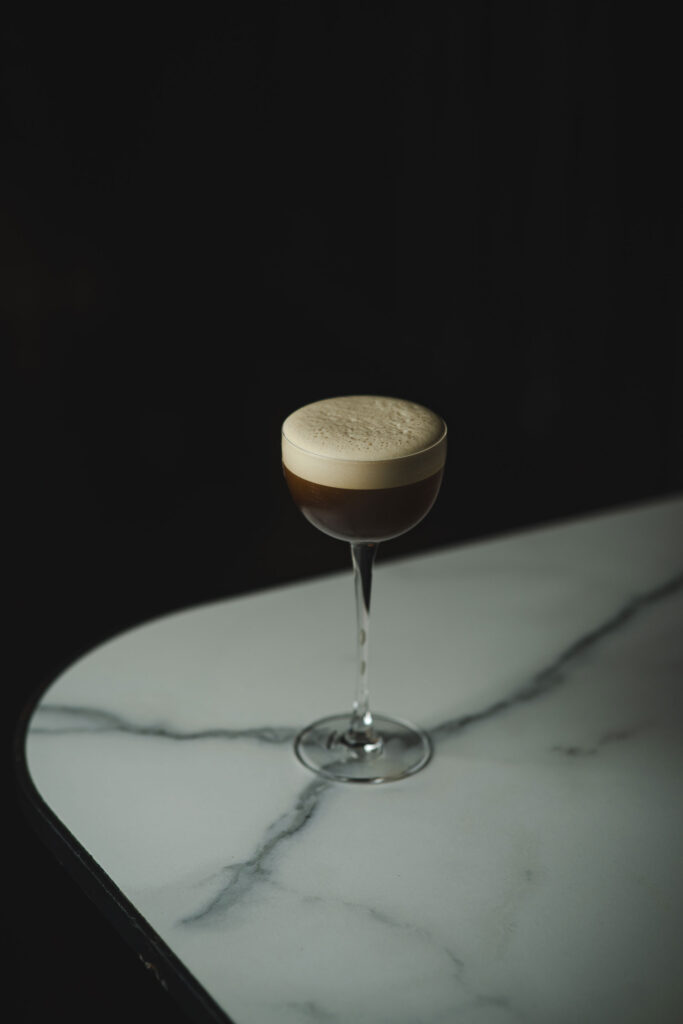
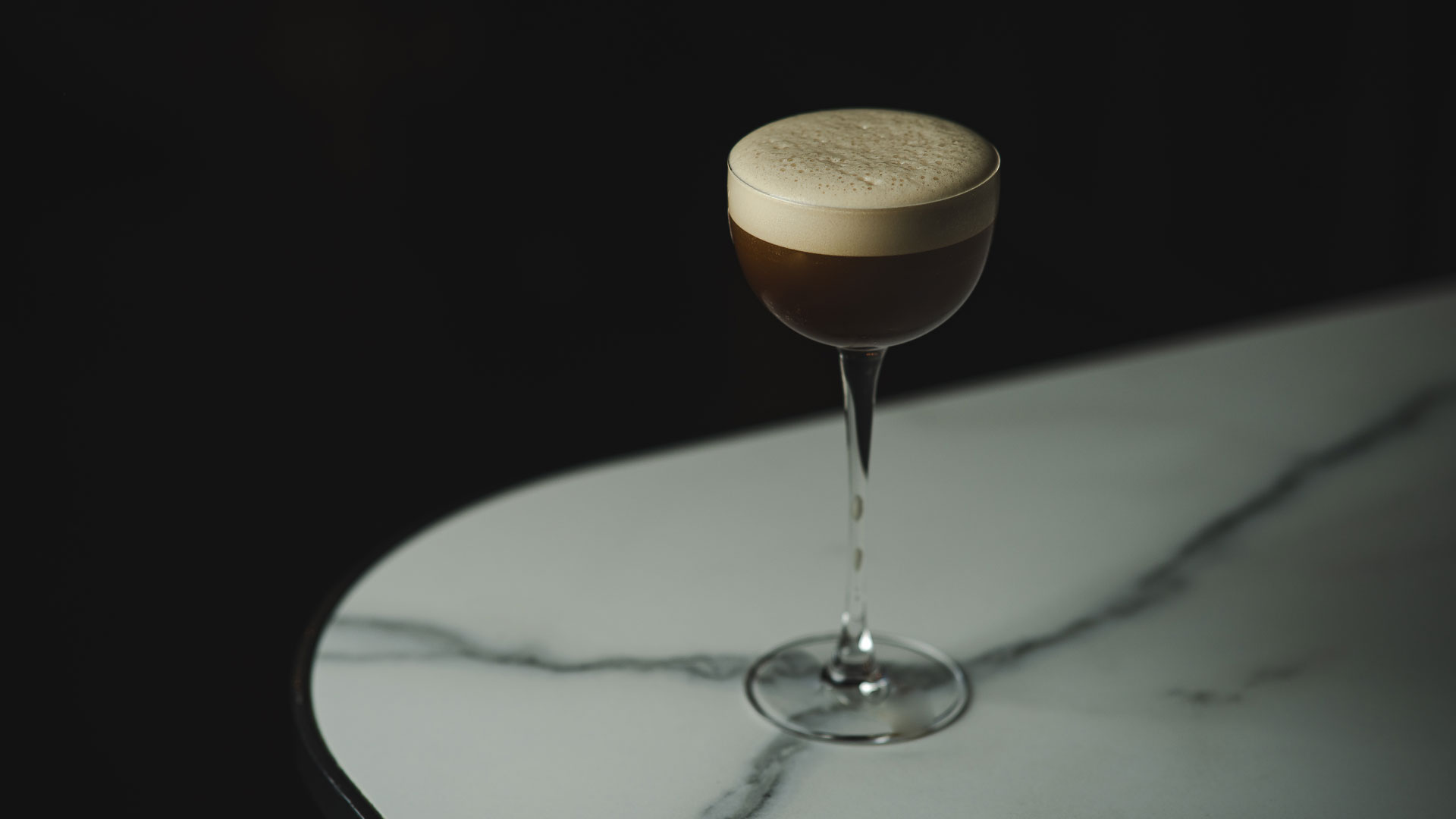
The revival of the Espresso Martini has gone hand in hand with countless variations. Around the world it appears with tequila, whisky, even in frozen versions. Below is a recipe that remains relatively faithful to Dick Bradsell’s original version, with one difference: it uses a single coffee liqueur instead of two.
Ingredients
• 50 ml vodka
• 30 ml coffee liqueur
• 10 ml sugar syrup
• 1 shot espresso
Method
Chill a coupe glass. Add all ingredients to a shaker with several ice cubes. Shake with the necessary intensity to “wake up and give a jolt,” then strain into the chilled glass.
Garnish
Three coffee beans placed on top of the foam.
Photo by Emanuel Florentin x Coqtail, location Bob Milano – all rights reserved