
If a cocktail bears a French name, chances are at least one of its ingredients comes from France. In the case of the Champs-Élysées, there are two: cognac and the herbal liqueur made by Carthusian monks. The drink is closely related to the Sidecar and, while far less famous, it has been steadily gaining admirers around the world.
The Origins of the Cocktail
The earliest known recipe for the Champs-Élysées appears in Drinks Long and Short, a cocktail book published in London in 1925 by Nina Toye and A.H. Adair. The recipe was written for six servings and calls for “three glasses of brandy, one glass of herbal liqueur and one and a half glasses of sweetened lemon juice.” The ingredients are shaken with a dash of Angostura bitters and strained into a coupe.
Five years later, in 1930, the drink appears again in The Savoy Cocktail Book by Harry Craddock. The ingredients and proportions remain the same, with one notable change: cognac replaces brandy. The distinction matters. Brandy is a broad category of spirits distilled from fermented fruit, while cognac refers to the specific French appellation. Craddock’s choice likely reflects an effort to emphasize the cocktail’s French identity.
The Story of the Champs-Élysées
The history of the Champs-Élysées leaves room for speculation. No reliable record identifies its creator or the exact moment of its invention, and that information has likely been lost.
Most historians agree that the drink emerged during the first half of the 1920s and that it is French in origin. Its name echoes the famous Avenue des Champs-Élysées, the grand boulevard that stretches nearly two kilometers between the Arc de Triomphe and Place de la Concorde.
The connection to France extends beyond the name. As Harry Craddock noted, both of the cocktail’s alcoholic components—cognac and the herbal liqueur produced by Carthusian monks—are firmly rooted in French tradition.
A Cousin of the Sidecar
Many cocktail historians consider the Champs-Élysées a twist on the Sidecar. The Sidecar itself is a sour built with cognac, orange liqueur and lemon juice. It emerged around the end of the First World War, possibly at the Ritz Hotel in Paris, though no definitive proof exists.
The relationship between the two drinks is often cited as further evidence of the Champs-Élysées’ distinctly French DNA.
The Champs-Élysées Cocktail Recipe
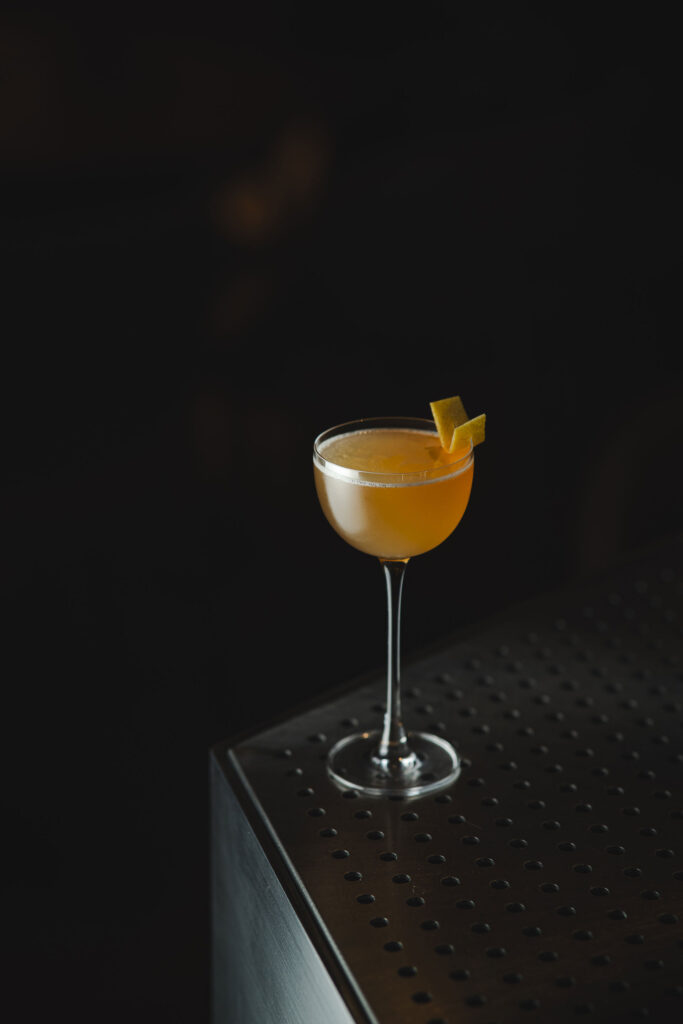
Cocktail historian David Wondrich notes that in early recipe books a “wine glass” corresponded to about two fluid ounces, roughly 60 milliliters. The recipe below is derived by dividing the quantities listed by Harry Craddock in The Savoy Cocktail Book by six.
Ingredients
• 30 ml cognac
• 10 ml French herbal liqueur
• 15 ml sweetened lemon juice
• 1 dash Angostura bitters
Method
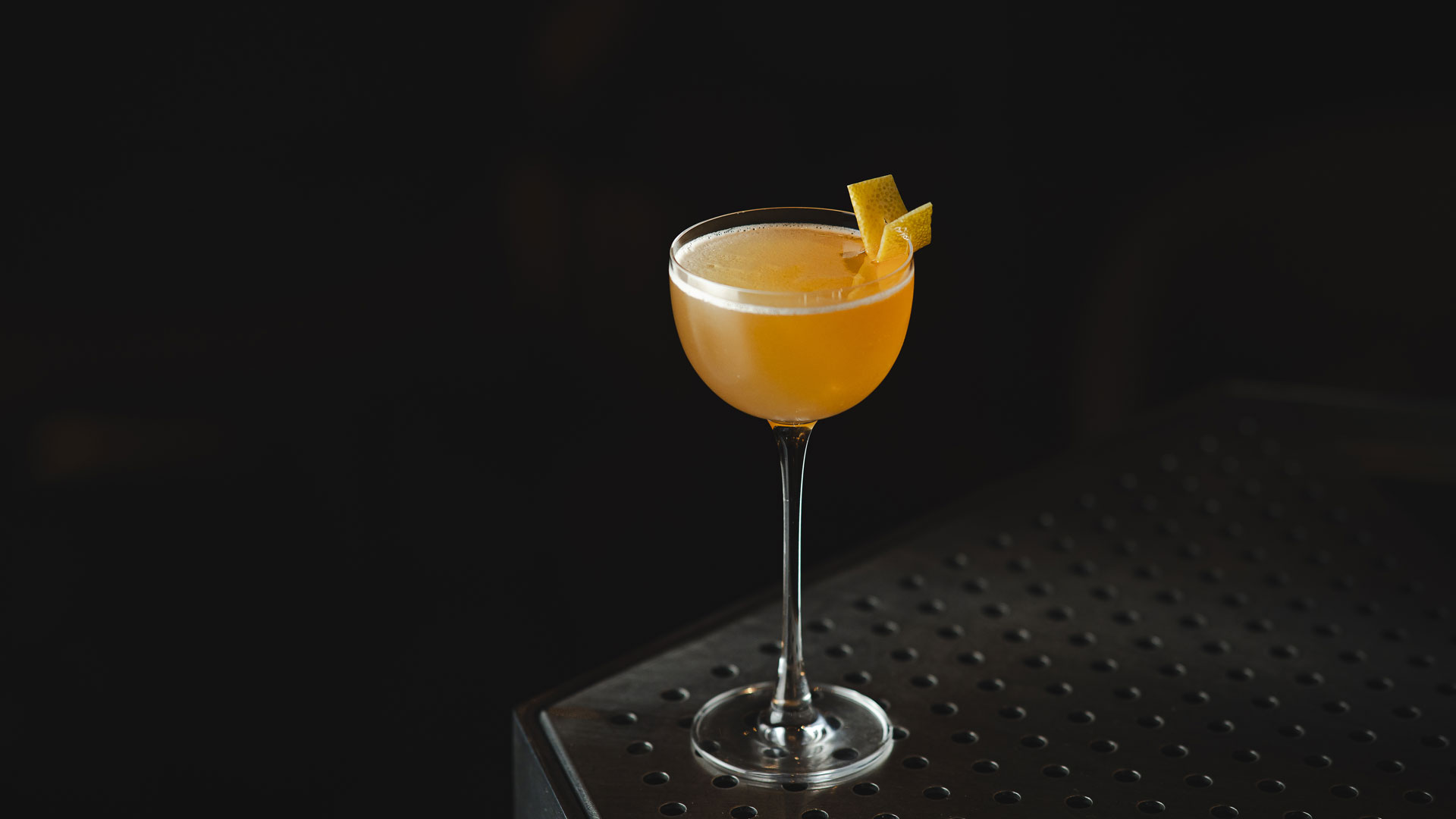
Add all the ingredients to a shaker with cubed ice. Shake vigorously, thinking of the Arc de Triomphe, then strain into a coupe.
Garnish
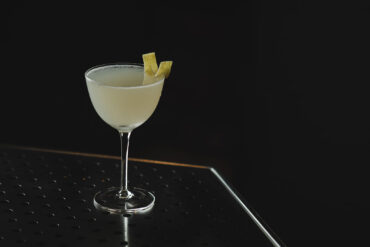
None. If desired, a small lemon twist works well.
Images credits Emanuel Florentin, location Bob The Other Side – all rights reserved