
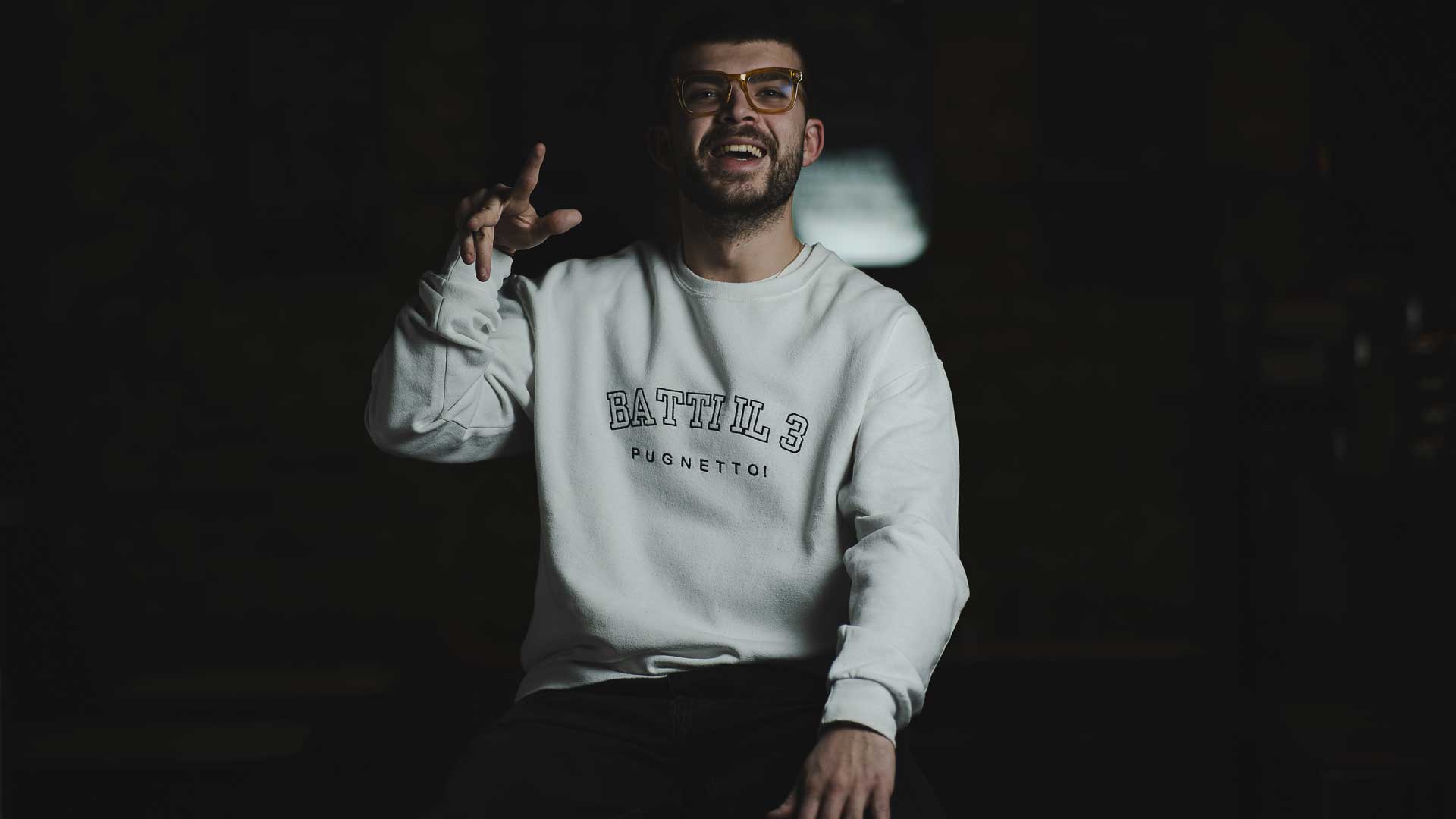
Alessandro Belluschi, known as Pellet, the bartender with one hand, works in beverage marketing and organizes initiatives dedicated to the bartender community, such as the Bartender Soccer Game. This is his story.
Alessandro Belluschi, a Passion Called the Bar
“My disability doesn’t make me less normal. It’s something that makes me unique.” Alessandro Belluschi, 24, from Brianza, says this after years spent grappling with the opposite idea. With the constant attempt to conform and to fit within a version of normality that seemed like the only possible goal. But where does the real limit lie? In a physical condition, or in the judgmental gaze of others? “I used to think about the right hand I couldn’t move. Now I think about the left one that can even shake.”
For Alessandro, the bar came early. Because the bar has always been his passion. The small venues along the Ligurian Riviera, where he spent time as a teenager, became an observation point. “I would watch bartenders move behind the counter, shaking, pouring, skillfully preparing garnishes. And I’d tell myself: ‘It’s beautiful, I’d love to do that too.’” A desire immediately followed by a question: “Everyone does it with two hands. But how am I supposed to do it?”
The Uniqueness of Alessandro Belluschi and the Great Limitation of Normality
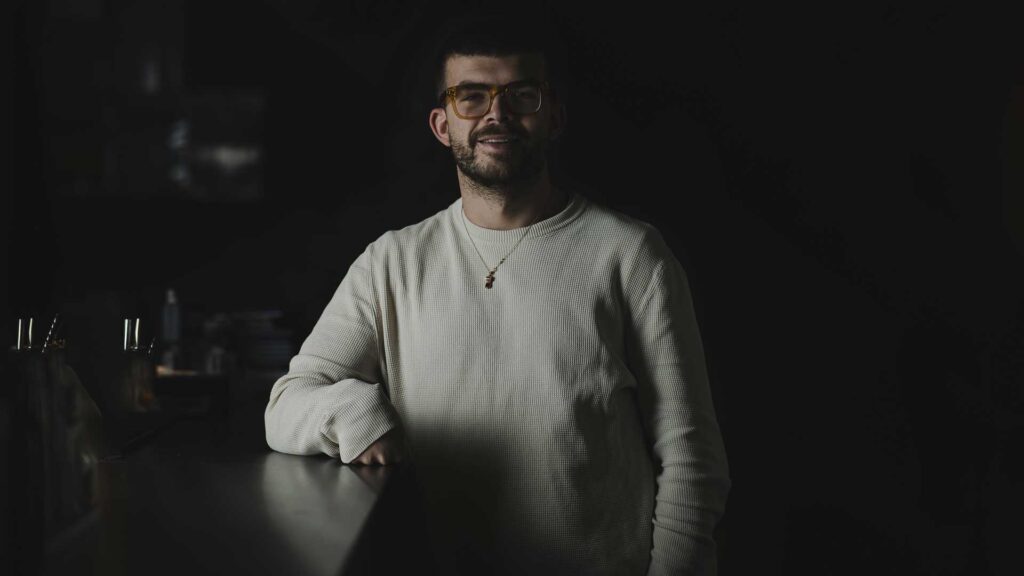
Alessandro was born in 2001 with hemiparesis affecting the right side of his body. A condition that has run through his childhood, friendships, sports, school life and later work. “My parents allowed me to do everything and to live every experience in the most ‘normal’ way possible.” And that very idea of normality — that word we all use so casually — over time became a cumbersome standard for him.
“For me, being normal meant having to do things the way others did. I realized instead that I don’t have to hide my disability behind a mask. When a person with a disability wants to do something, they always find a solution. They work twice as hard, sometimes three times as hard, and then they find it. I think the more disabled person is the one who doesn’t give you the opportunity to try. The bar world could do much more by creating real opportunities: events, work experiences. Encouraging training schools, supporting dedicated pathways, giving space to those who want to step forward. Often, simply allowing people to gain experience is enough to truly change things.”
The Pull of the Bar
The bar fascinates him. “Better yet, it calls me and tests me harshly.” The first turning point arrives through a simple, almost accidental encounter with a family friend who shares a similar disability. Alessandro tells him about the doubt that is holding him back. The response is a blunt question that jolts him awake: “Why do you care?” A sentence that at first lingers, then returns with force and opens a new path.
By chance — or “by mistake,” as Alessandro admits with a laugh — he enrolls in a flair course. Does he quit? He stays. “I didn’t even know what flair was, but I liked it immediately and turned it into my personal challenge. And the more people told me it wasn’t for me, the more I dug in and kept going.” The act of throwing and catching bottles and shakers becomes practice, and that limit turns into daily work. “I kept going and finished the course. Of course, I didn’t become the best, but I know how to engage a guest with my acrobatics better than many others.”
All the Love for the Bar
Behind the bar, however, speed becomes a technical necessity. “I was slow; I have one hand. If I wanted to work, I had to be fast. So I looked for counters where I could organize everything around my body — bottles on the left, adapted stations.” Because everything responds to a precise need. “First of all, I didn’t want to inconvenience or disturb anyone.”
At the same time came university (Communication Sciences) and a personal and psychological journey in which Alessandro began dismantling that obsession with normality that had accompanied him for years. “I couldn’t feel at the same level as others, even when I was.” Meanwhile he sought space in the workplace and began to see the limitations of others—those who define themselves as “normal.” Endless interviews and extra trials produced many closed doors and phrases that stuck like labels. “You’re good, but we can only pay you half.” “We prefer someone with two hands.” “It’s just an image problem.”
And when the spirit is wounded, the body keeps the score. His right leg struggles to support him and falls become frequent. The second turning point arrives like a cold shower: a call offering an extra shift behind a bar while Alessandro is immobilized on his sofa at home, unable to walk. “I would have wanted to stay behind that counter for the rest of my life, but I understood that I needed to come to terms with myself, listen to myself and find another way to live the bar.”
Becoming Pellet
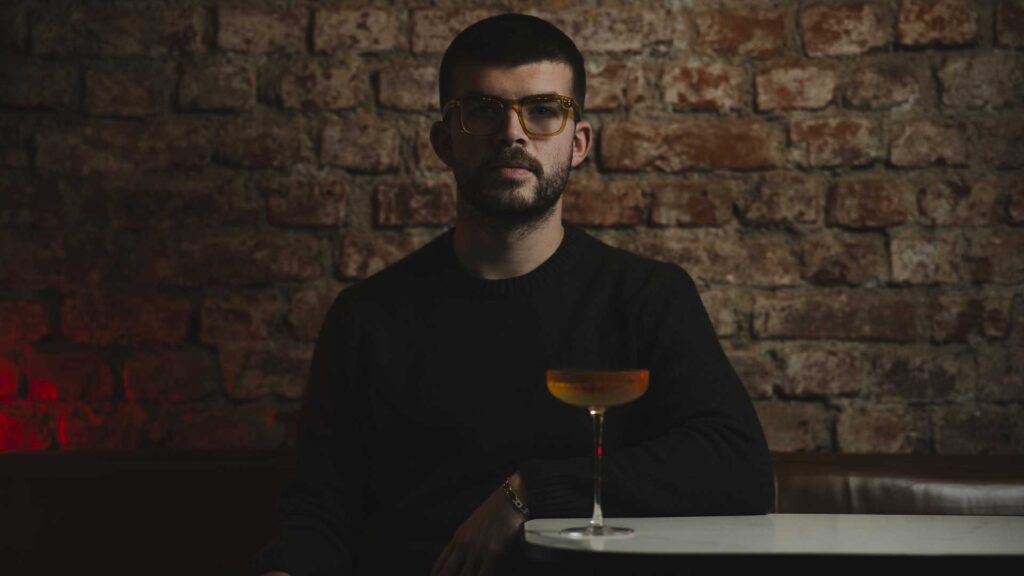
And that is what he did. For Alessandro, the bar changes form and becomes community when, in his final year of university, he chooses to write a thesis on the evolution of mixology examined through the laws of communication and marketing. The case study is Bruno Vanzan, the multi–world champion of flair bartending. “For me, Vanzan was a reference point, and meeting him felt like a dream coming true. That’s where Pellet was born.” A nickname as a new identity, built with sharp irony. Yellow as the guiding color of the logo. The tagline “batti il tre, pugnetto” as a signature.
In videos across his social channels, Pellet stands out for his engaging delivery and quick humor. Disability enters the narrative openly, while the focus is guided toward seeing the person in his entirety, beyond what is “missing.” Communication becomes, for Pellet, a way to remain in the industry, to build connections and to tell the story of the bar from different perspectives. For many, it becomes an example to follow.
From here the Bartender Soccer Game takes shape, also with the help of Francesco Losappio: five-a-side soccer matches designed to bring bartenders together outside work, in an informal setting. “I wanted to create a moment where people meet, have fun and think less about work.” Alongside these initiatives come video formats, interviews and stories about those who gravitate around the bar. “Starting in February, the first stop of Tassoni’s mocktail competition will begin, running through May with a seven-stop tour across Italy and a grand final in Milan. At every stop I’ll be the social face of the event and go live. A mix between infiltrator and entertainer, ready to tell and bring to life the competition from both inside and outside the bar.”
Pellet today is a young man who has managed to keep the fire of his passion for the bar alive — never allowing it to burn out.
Photos by Emanuel Florentin for Coqtail – all rights reserved